

Top things to do in Ronda
Whether you’re planning a day trip from the Costa del Sol or settling in for a few nights (which I’d strongly recommend), this guide walks you through everything worth experiencing in Ronda, from iconic monuments to hidden corners locals actually visit.
Getting Your Bearings: Understanding Ronda's Two Sides
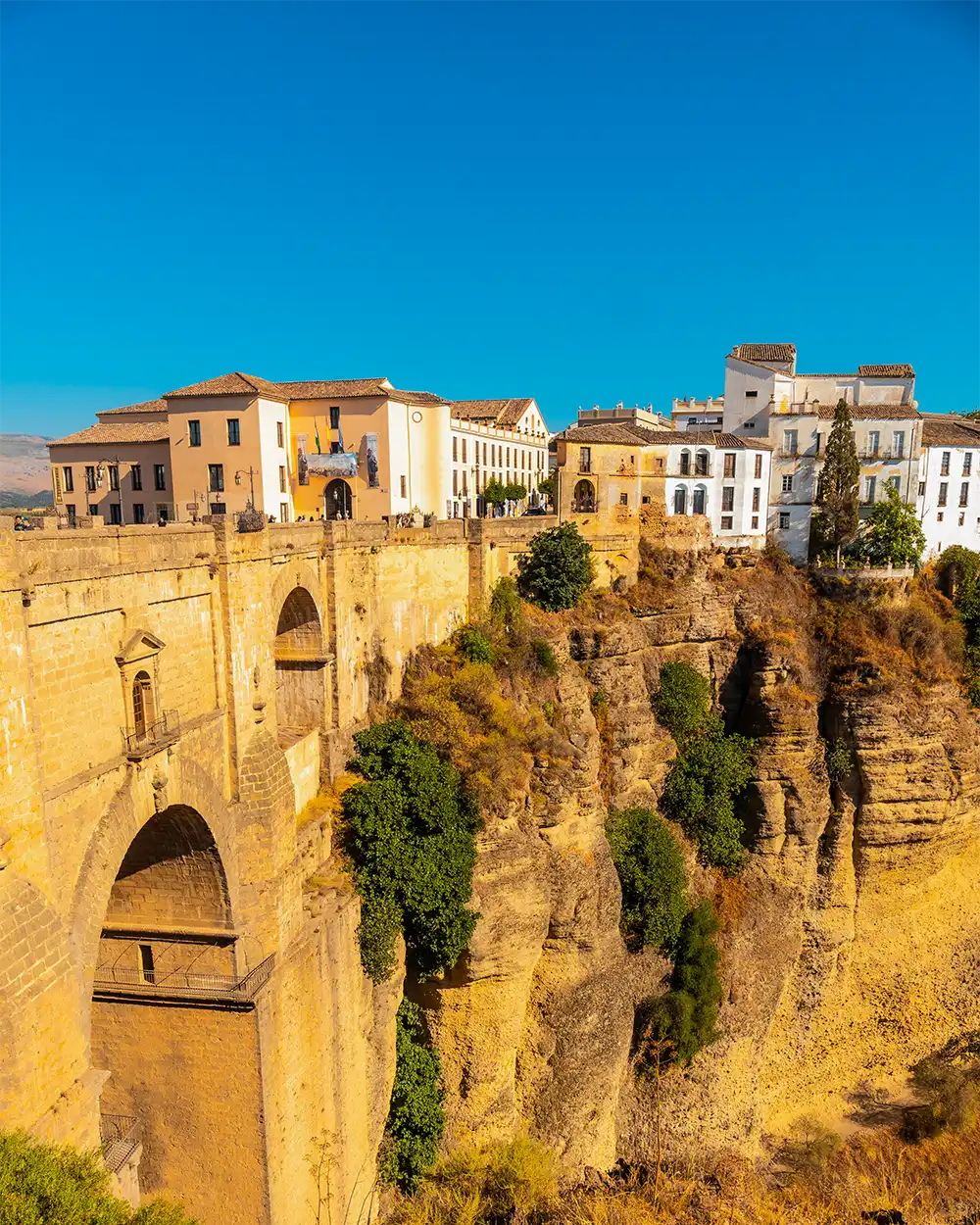
Before diving into specific attractions, it helps to understand Ronda’s geography. The city divides into two distinct areas separated by El Tajo gorge:
La Ciudad (Old Town)
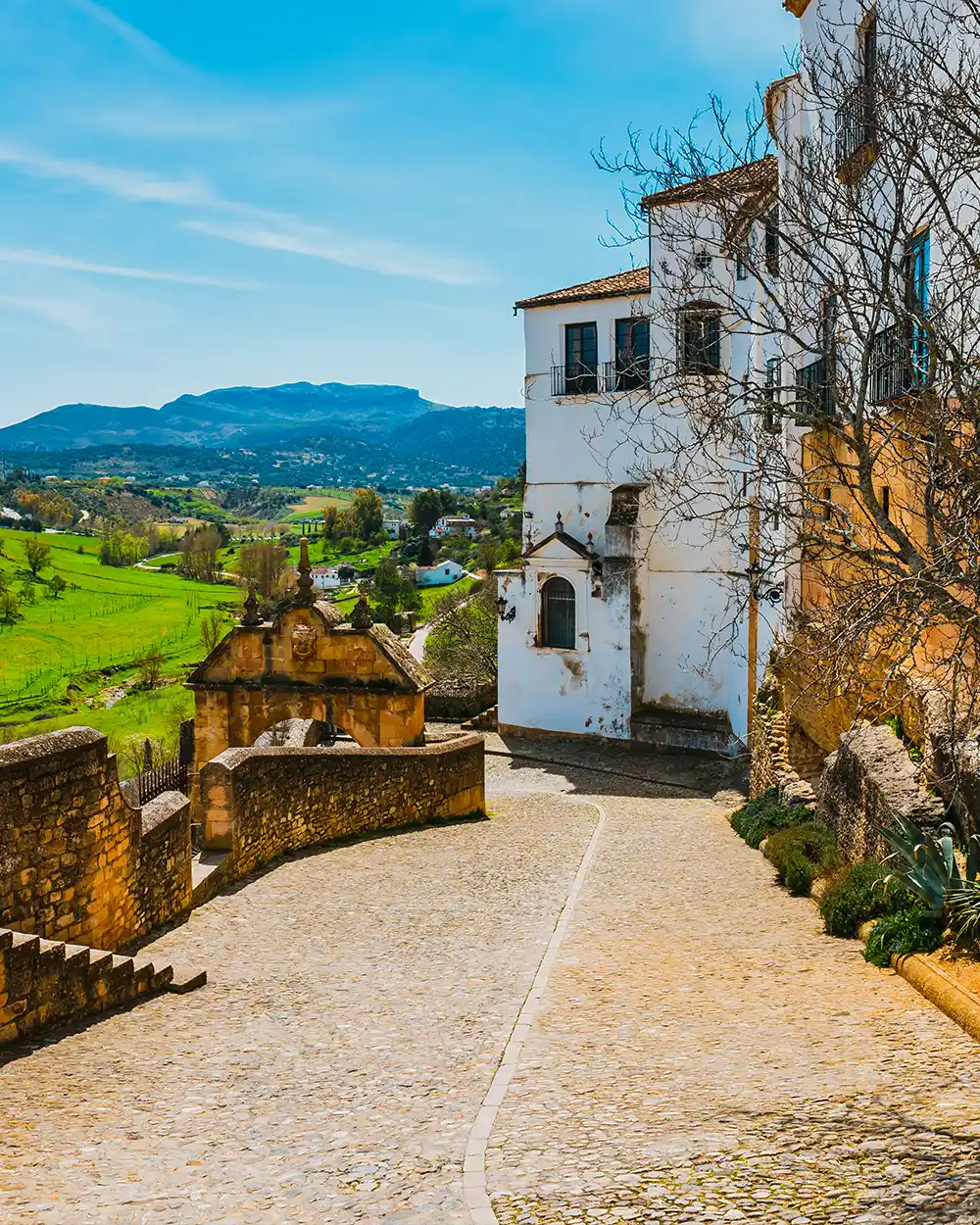
The historic side features Moorish architecture, winding cobblestone streets, and medieval charm. This is where you’ll find the Arab baths, ancient palaces, and the oldest parts of the city walls.
El Mercadillo (New Town)
Despite the name, this “new” section dates to the 15th century. Here you’ll encounter the bullring, main shopping street (Carrera Espinel), and most restaurants and hotels. It’s livelier and more commercial.
The Puente Nuevo connects these two worlds, but two older bridges—Puente Viejo and Puente de San Miguel (also called the Arab Bridge)—also span the gorge. Understanding this layout prevents confusion when navigating between attractions.
The iconic Puente Nuevo: More Than Just a Photo Stop
Yes, everyone comes for the bridge—but most visitors miss experiencing it properly. Puente Nuevo took 42 years to complete (1751-1793) after the first attempt collapsed, killing 50 people. The current structure rises 98 meters above the Guadalevín River, and its central arch conceals a small chamber that served as a prison during the Spanish Civil War.
What most guides won’t tell you: The bridge looks impressive from above, but the perspective from below is breathtaking. A newly opened walkway (€5 admission) descends into the gorge via Plaza de María Auxiliadora, providing safe access with hard hats provided. Tickets at Desfiladero del Tajo are time-limited to 30 people per hour, so book ahead during high season.
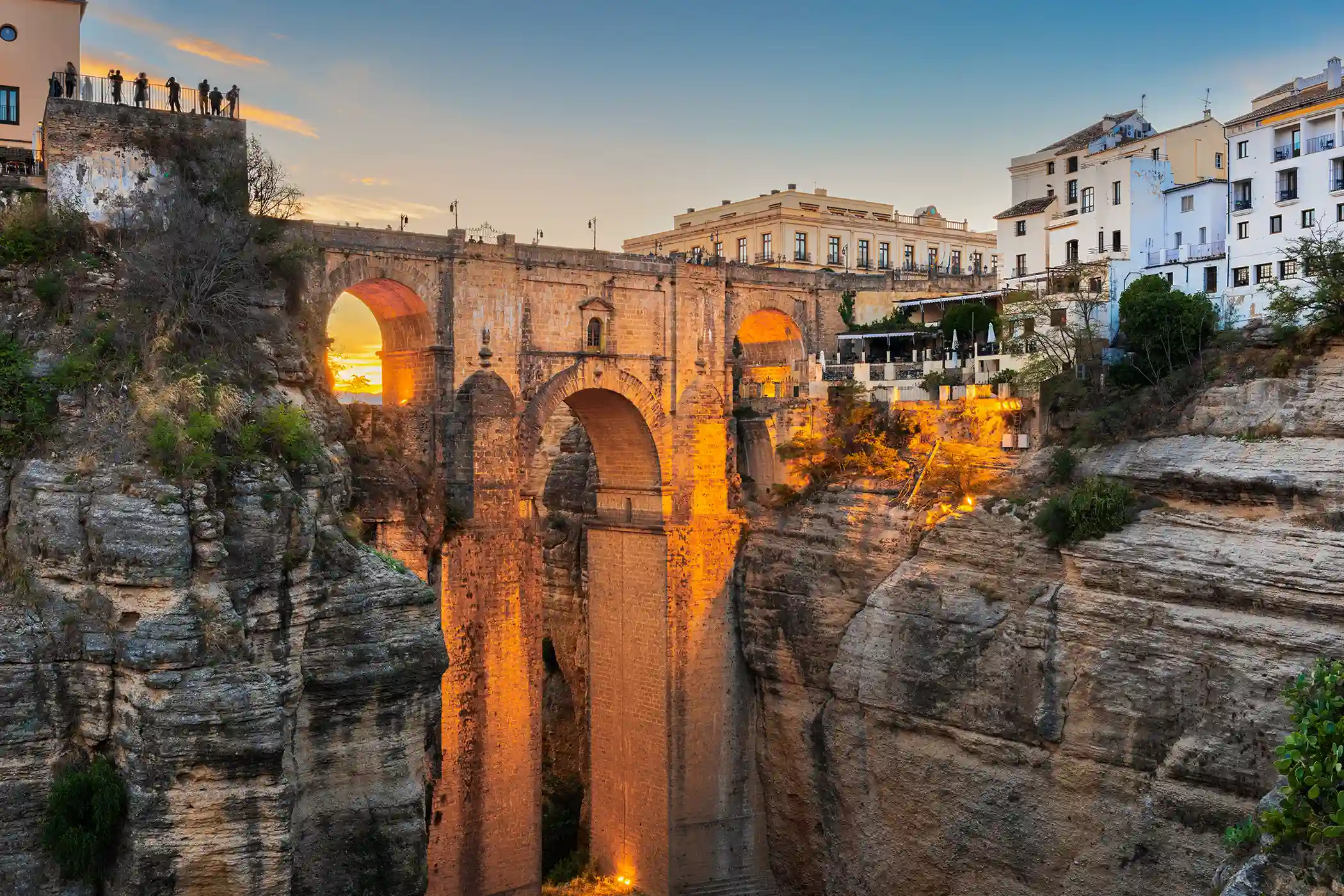
For free views from below, the steep hiking path offers an authentic experience. It’s challenging—wear proper shoes—but you’ll stand directly beneath the bridge’s arches with the river rushing past. Early morning or late afternoon provides the best lighting, and you’ll likely share the space with rock climbers preparing for via ferrata routes.
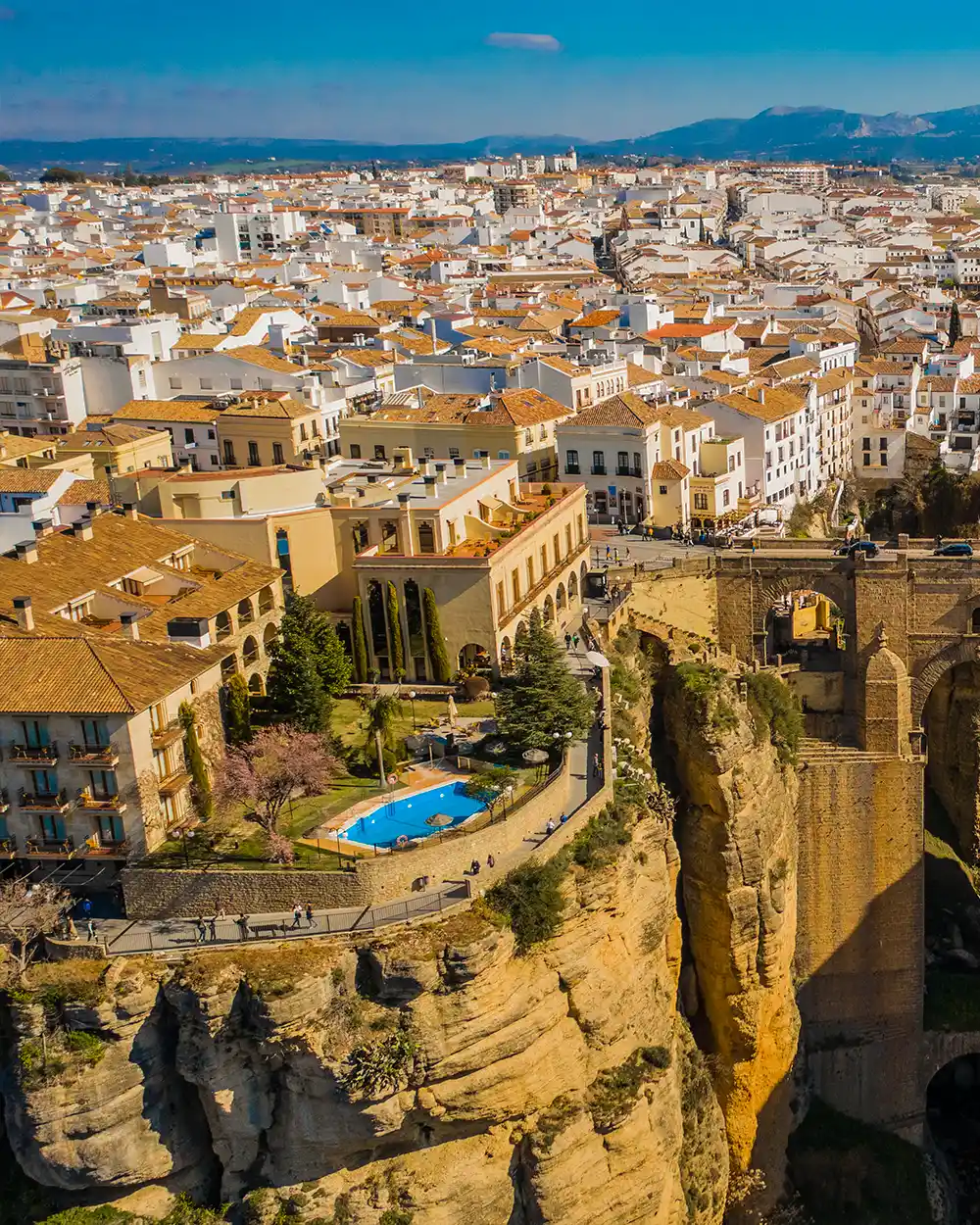
Pro tip from experience: The Parador de Ronda terrace offers the most dramatic bridge views while enjoying drinks at sunset. Even if you’re not staying there, the public terrace is accessible (though restoration work may limit access—check ahead). I’ve also discovered that Hotel Catalonia Ronda’s rooftop (mentioned later) provides equally spectacular evening views.
Exploring Ronda's Moorish Heritage
Arab Baths: The Peninsula's Best-Preserved Hammam
The Baños Árabes date from the 13th-14th centuries and represent the most complete Arab bath complex on the Iberian Peninsula. Unlike Roman baths where you’d submerge in water, these functioned as steam rooms with three temperature zones: cold, warm, and hot.
The star-shaped vents in the brick ceiling create mesmerizing light patterns on the stone floors—especially magical around midday when sunlight streams through. Admission is €4.50 (free Tuesdays 3-5:30pm), and the adjacent gardens along the old city walls offer shaded benches perfect for contemplating Ronda’s layers of history.
These baths served not just for hygiene but as social centers during Muslim rule. Their exceptional preservation stems from being buried under other structures for centuries, protecting them from destruction after the Christian reconquest.
Casa del Rey Moro: The "Moorish King's House" That Never Housed a King
Despite its name, Casa del Rey Moro never actually served as a royal residence. The current palace dates to the 18th century, though it sits atop Moorish foundations. The real attraction is La Mina—a 14th-century water mine cut 60 meters into the gorge’s rock face.
Descending the 200+ stone steps through torch-lit passages feels like exploring a medieval secret. At the bottom, you emerge at the Guadalevín River, where crystal-clear pools invite brave swimmers (yes, people do swim here, though water temperatures stay brisk). The terraced gardens above feature peacocks wandering freely and some of the finest mountain views in town.
Entry costs €10 including an audio guide that explains how Christian slaves were forced to carry water up these stairs during Ronda’s Moorish period—and how this mine became the city’s weak point during the 1485 Catholic reconquest.
Visiting tip: The palace house remains closed for restoration (as of 2024), but the gardens and mine are fully accessible. Combine this with the nearby Puerta de Almocabar for an efficient tour of Ronda’s Islamic heritage.
Walking the Old City Walls and Puerta de Almocabar
The Puerta de Almocabar served as Ronda’s main southern gate during the 13th-century Moorish period. The horseshoe arch design and surviving wall sections showcase Islamic military architecture at its finest. Unlike other Andalusian cities where walls were demolished for urban expansion, Ronda’s defensive position on cliff edges preserved significant portions.
You can climb onto the walls from a tower next to Almocabar Gate for elevated views across the old town’s rooftops and surrounding countryside. The walls feel particularly atmospheric early morning or near sunset when fewer tourists wander through.
From here, explore the remnants of the Alcazaba (Moorish fortress) and wander through what was once the old Jewish quarter before the Catholic reconquest.
Historic Palaces and Museums Worth Your Time
Palacio Mondragón
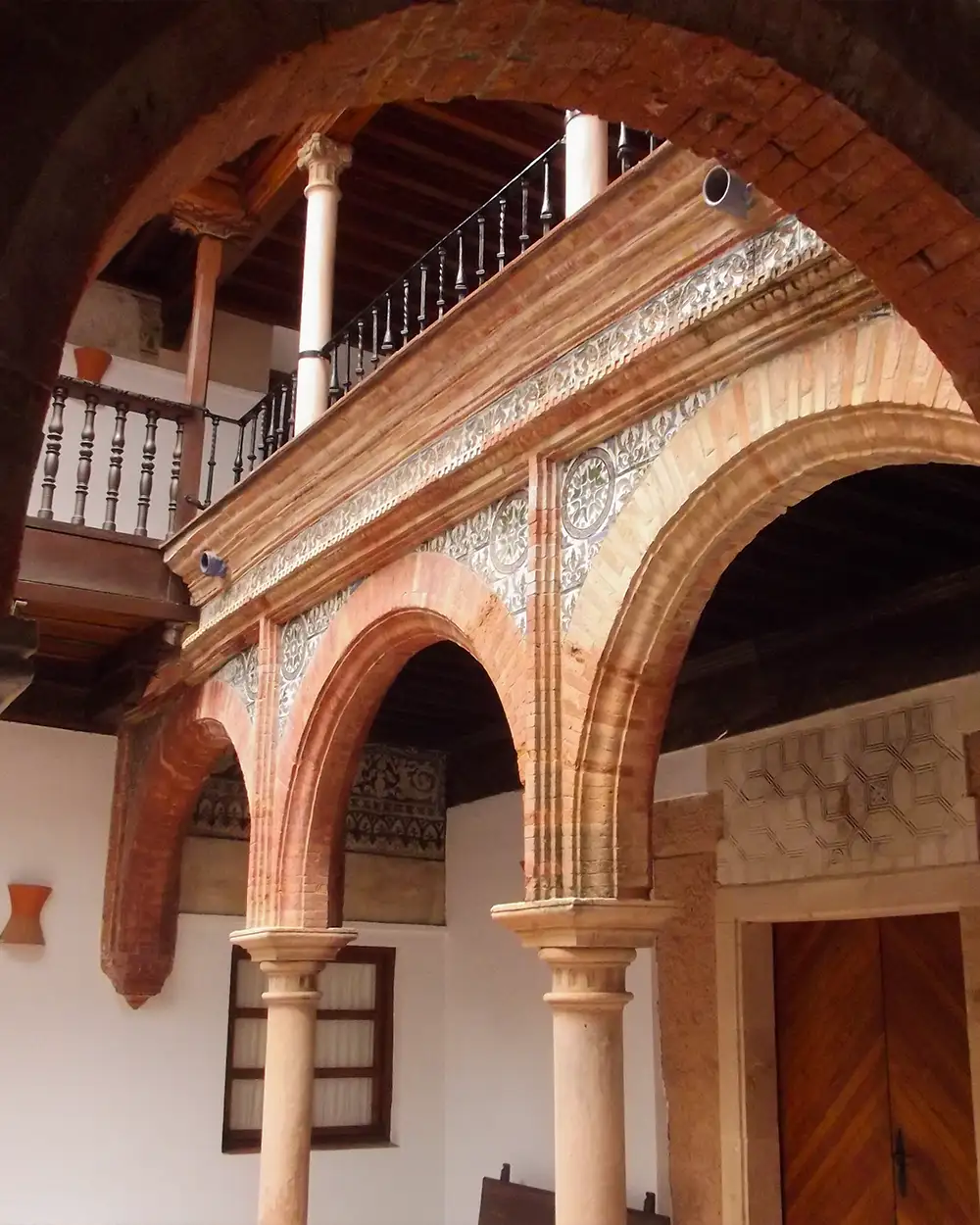
This 14th-century palace exemplifies Ronda’s layered history. Built during Moorish rule, modified by Catholic governors, and now housing the Municipal Museum, Mondragón offers Nasrid-style courtyards reminiscent of Granada’s Alhambra (on a smaller scale).
The interior courtyards feature intricate tilework, horseshoe arches, and small fountains surrounded by orange trees. The museum collections trace Ronda’s story from prehistoric cave dwellers through Roman occupation to the present. For €3, you gain access to both palace and museum plus panoramic views from Ronda.
Casa de Juan Bosco
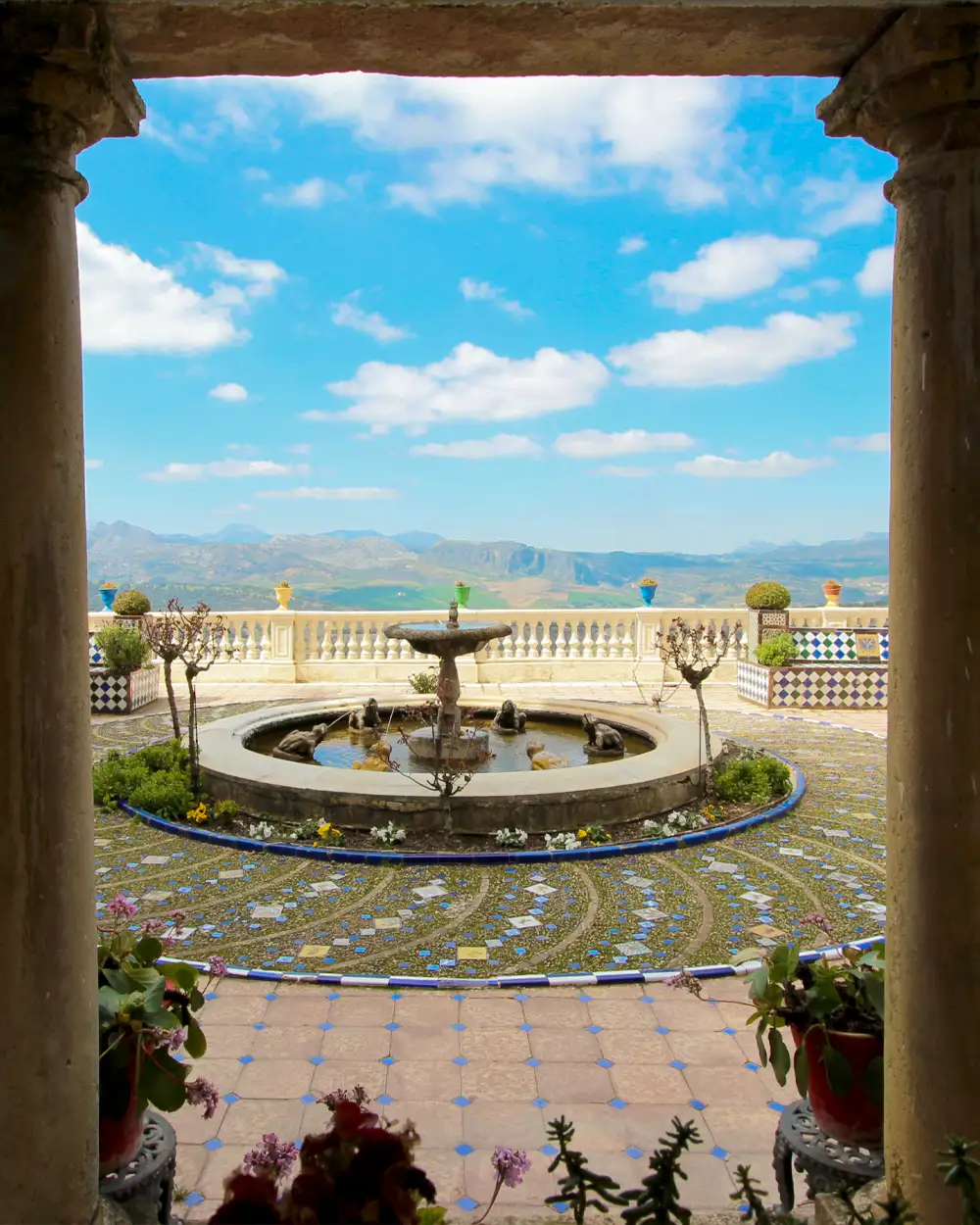
This modernist mansion blends Moorish-influenced architecture with the serene atmosphere of its later life as a Salesian retreat. Originally a private residence, it was donated to the local Catholic Salesian community, which named it after their founder, Don Bosco.
The house centers around a spacious square patio framed by carpanel arches resting on Tuscan columns, with a wooden gallery leading to the main rooms. Outside, a charming garden offers sweeping views over El Tajo, while a massive underground cistern hints at the city’s age-old struggle to secure fresh water.
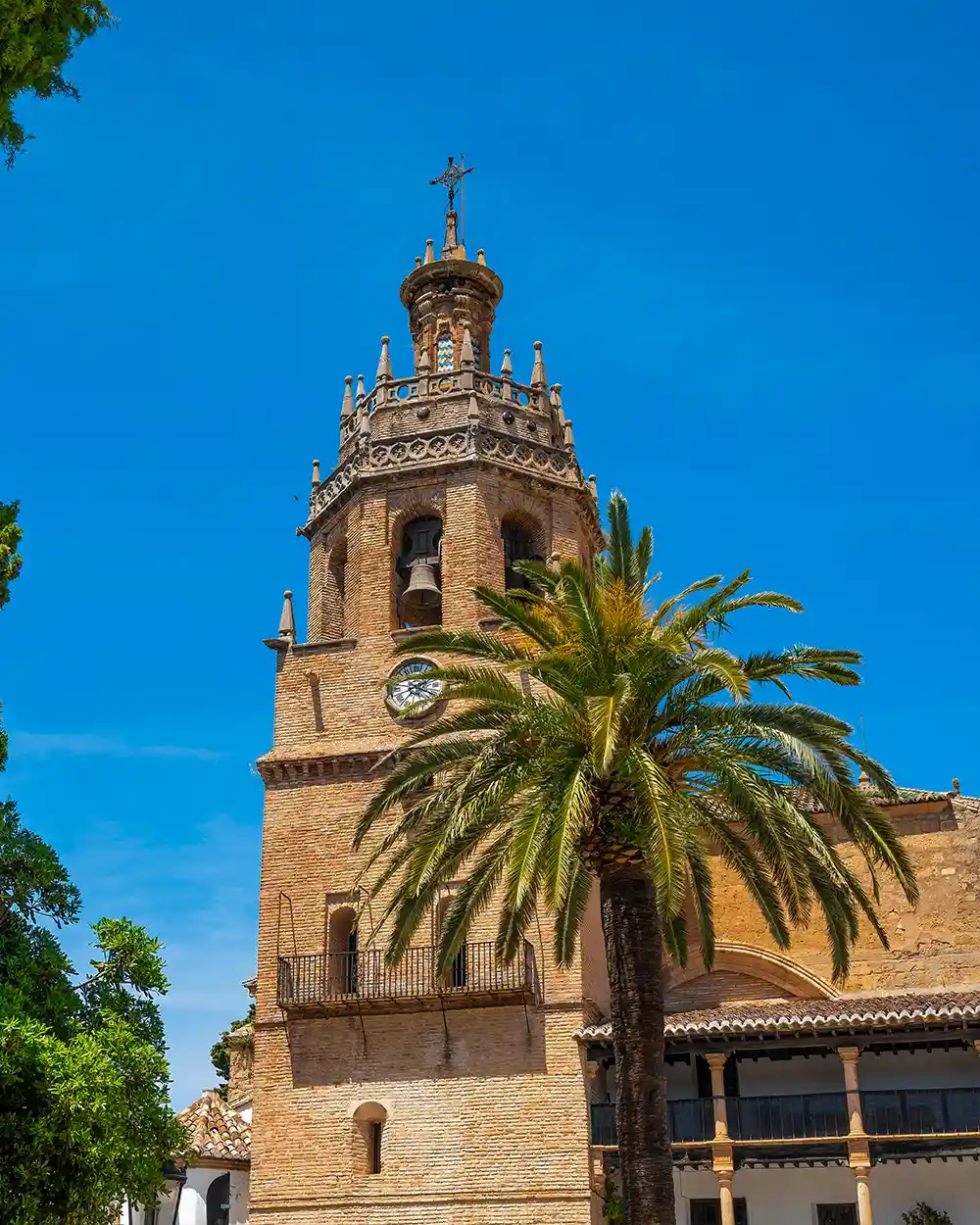
Iglesia de Santa María la Mayor
Located in Plaza Duquesa de Parcent (the old town’s prettiest square), this church began as Ronda’s main mosque during Islamic rule. After the Catholic reconquest, it was converted but retained the original minaret (now the bell tower) and sections of the mihrab (prayer niche).
The interior blends Gothic, Renaissance, and Baroque elements—typical of Spain’s layered religious architecture. For €4.50 with audio guide, you can explore the interior and access the church’s viewing deck. The orange-tree-lined plaza outside offers several café terraces perfect for people-watching.
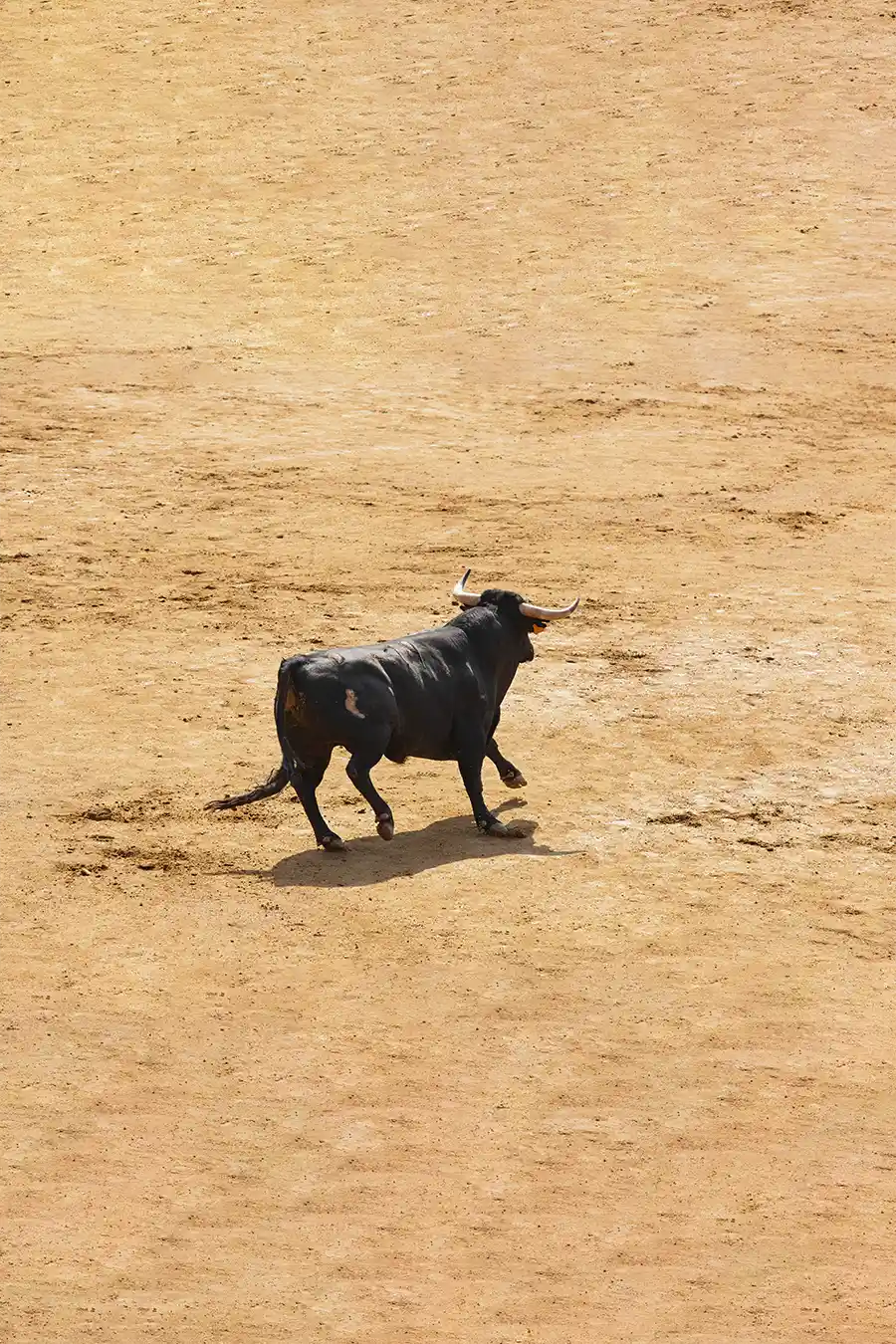
The Bullfighting Legacy: Understanding Ronda's Controversial Heritage
Even if you oppose bullfighting, Ronda’s bullring represents a significant piece of Spanish cultural history. Built in 1785 by architect José Martín de Aldehuela (who also designed Puente Nuevo), it’s considered Spain’s oldest modern bullring and remains beautifully preserved.
The arena has a diameter of 66 meters (217 feet), surrounded by 68 arches supported by 136 stone pillars. The two tiers of seating and the Royal Box with its Arabic-tiled roof create an undeniably impressive space.
The Romero family of Ronda revolutionized bullfighting in the 18th century. Pedro Romero, the most famous matador from this lineage, reportedly killed 5,600 bulls during his career without injury. The museum inside displays bullfighting memorabilia, traditional costumes, and artwork depicting the controversial tradition’s evolution.
Ernest Hemingway was a frequent visitor, and his novel “Death in the Afternoon” extensively discusses Ronda’s bullfighting heritage. Only one corrida occurs annually now—the Feria de Pedro Romero in September, drawing traditional enthusiasts from across Spain.
Admission is €9.50 (€11 with audio guide). I recommend getting the audio version—it provides crucial context and historical detail. The empty ring conveys an eerie beauty, especially if you arrive early before tour groups. Even bullfighting opponents often find the architecture and historical context worthwhile.
Adjacent experience: Hotel Catalonia Ronda’s rooftop terrace offers stunning views over the bullring toward the countryside—perfect for sundowners. I enjoyed a coffee here in the evening, and the perspective of the plaza at sunset was spectacular.
Discover Ronda Like a Local
Download our free map and explore Ronda’s most iconic landmarks at your own pace. Perfect for first-time visitors and curious explorers alike.
Reservatauro: Visiting a Bull Breeding Ranch
For those interested in understanding the full context of Spain’s bullfighting culture, visiting Reservatauro breeding facility provides fascinating—and at times unsettling—insights. This working ranch breeds both fighting bulls and purebred Andalusian horses.
When I visited Reservatauro and found it deeply educational. The guide’s passion for preserving these ancient bloodlines was evident. You observe the bulls from your vehicle (essential for safety—these are genuinely wild animals), and the contrast between their beauty and their ultimate purpose creates a complex emotional experience.
The ranch also breeds magnificent Andalusian horses, and watching a dressage demonstration provided a highlight. I even attempted to hold the heavy traditional espada (sword) used in bullfighting—it’s far heavier than you’d imagine, requiring incredible strength and skill to wield properly.
The experience costs approximately €25-30 per person. Book in advance—I’ve included a link in the resources section. Even if bullfighting makes you uncomfortable, the Andalusian horse breeding and the stunning countryside make it worthwhile.
Important context: These bulls live free-range lives on vast estates—arguably better lives than most livestock—until their final day. The breeding program preserves genetics going back centuries. Whether this justifies the tradition remains a personal judgment, but understanding the full picture adds valuable context.

Gardens, Parks, and Breathtaking Viewpoints
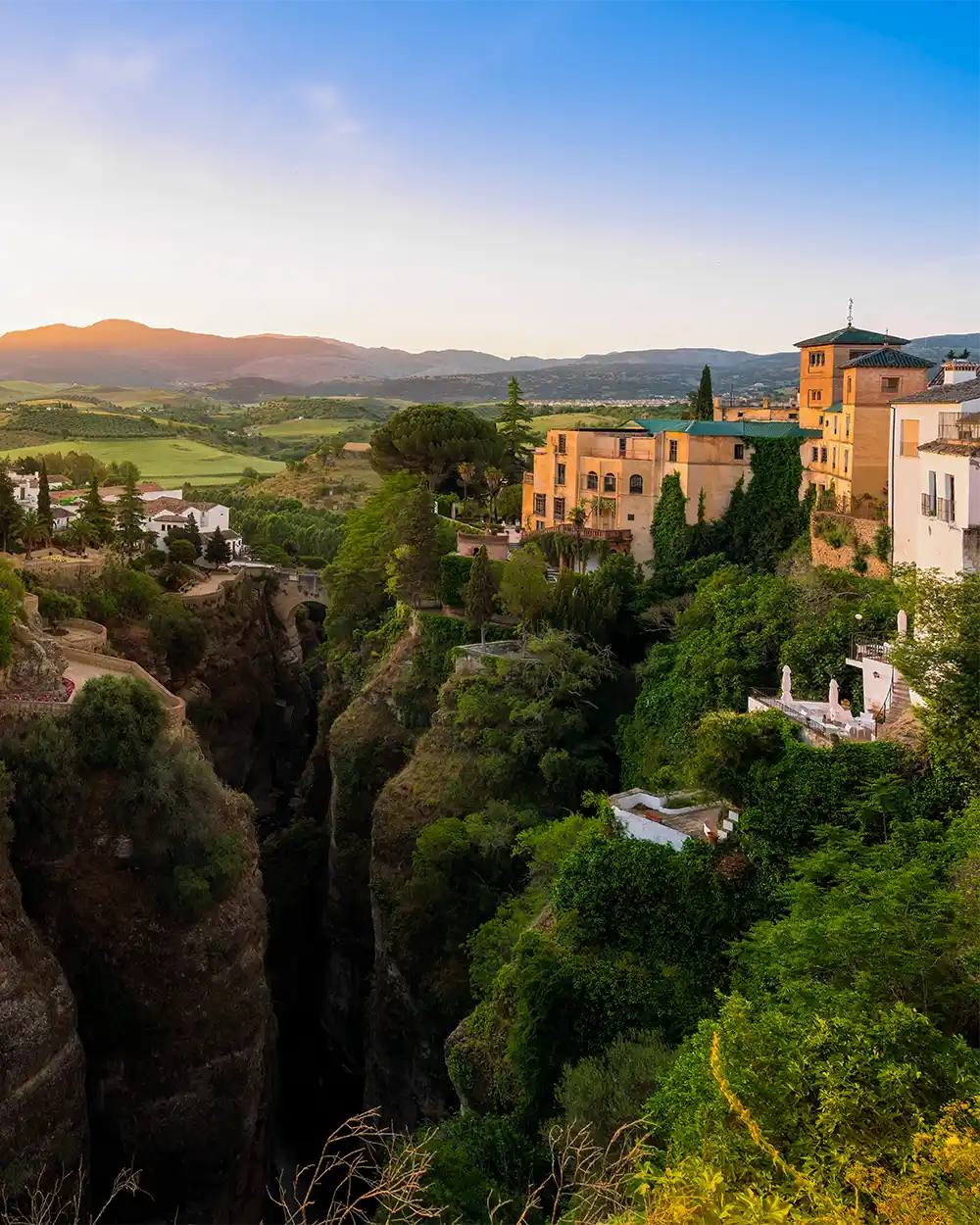
Jardines de Cuenca: Terraced Gardens with Million-Dollar Views
The Jardines de Cuenca cascade down the gorge’s cliff face on the new town side, dedicated to Cuenca, Ecuador (Ronda’s sister city since 1975). These terraced gardens offer alternative perspectives of Puente Nuevo, Puente Viejo, and the Casa del Rey Moro opposite.
Multiple levels connected by staircases create intimate spaces that feel worlds away from the busy streets above. In spring, roses and jasmine fill the air with fragrance. The gardens are free, surprisingly uncrowded, and ideal for escaping midday heat under shade trees.
Photographer’s note: Late afternoon light illuminates the old town across the gorge beautifully from the lowest terraces.
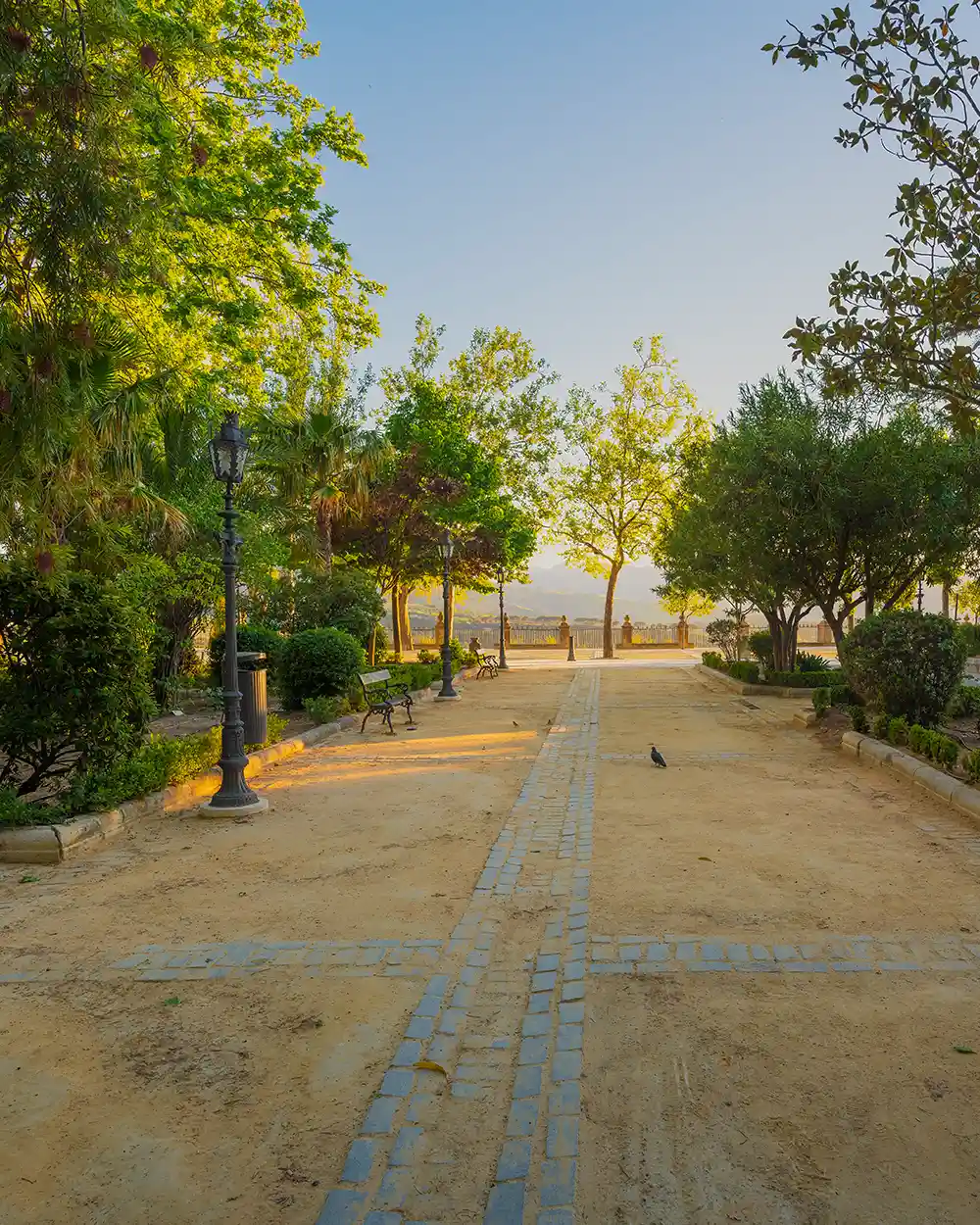
Alameda del Tajo Park and the "Balcón del Coño"
This formal park next to the bullring combines manicured gardens, wide promenades, and cliff-edge viewpoints. Locals stroll here during early evening paseos, and you’ll often hear guitar music from street performers.
Two paseos honor famous visitors: Paseo de Hemingway and Paseo de Orson Welles. Welles fell deeply in love with Ronda during 1950s filming visits and eventually purchased a home here. After his death, his ashes were interred at the estate of his friend, bullfighter Antonio Ordóñez (whose statue stands before the bullring).
The Balcón del Coño—an overhanging platform suspended above the gorge—tests your nerve. The name comes from the Spanish expletive presumably uttered by first-time visitors peering straight down. Not for those with height sensitivities, but the views are extraordinary.
Paseo de los Ingleses: The English Promenade
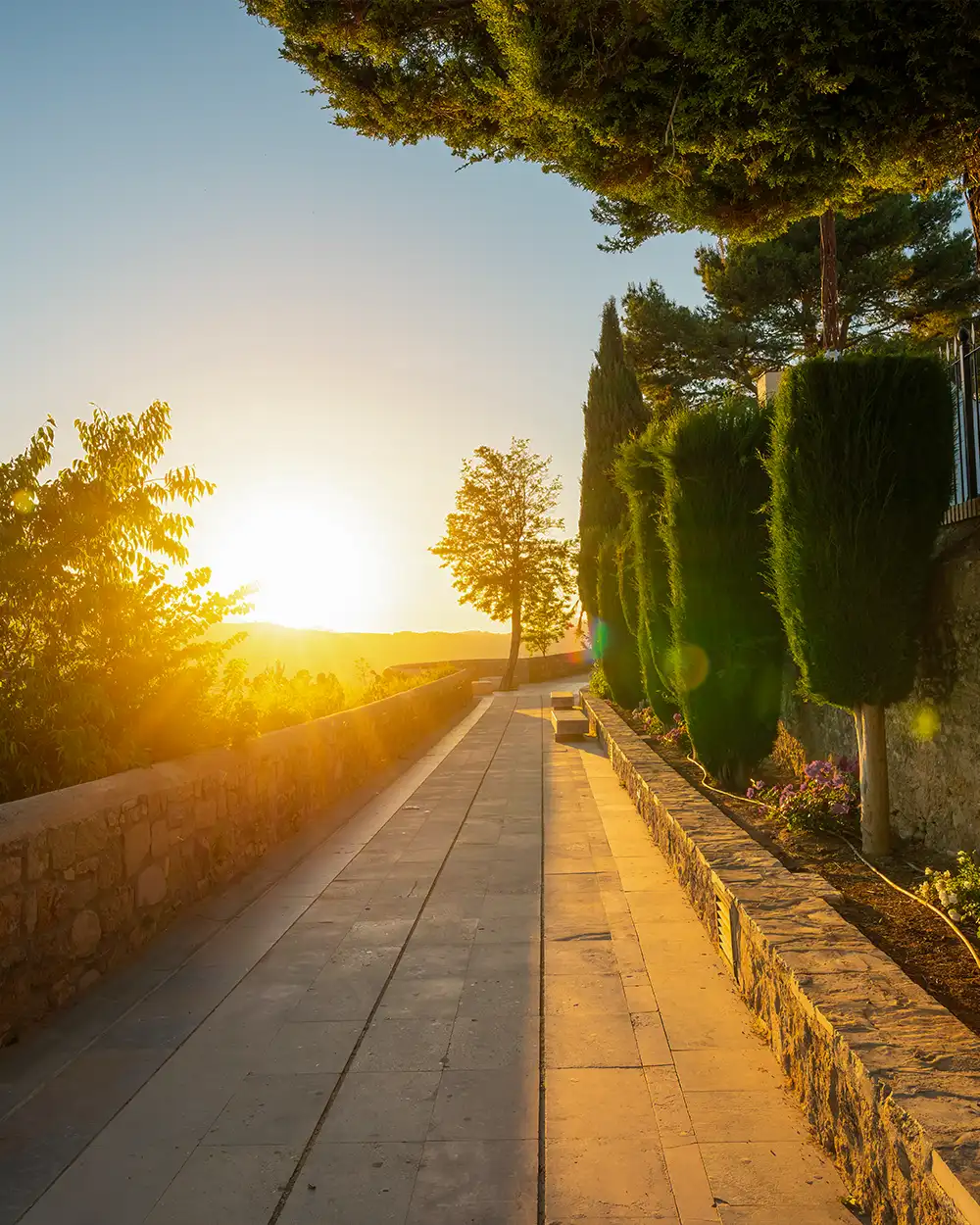
This cliff-edge path originally connected to Hotel Victoria for exclusive guest use (particularly British travelers arriving by train from Gibraltar in the 19th century). Now public, the walk extends from Alameda del Tajo to Mirador Virgen del Rocío.
Early morning offers the best experience—just you, swallows darting between cliffs, and the occasional kestrel. The countryside unfolds below in layers of olive groves and white villages.
Food and Drinks: What and Where to Eat in Ronda
Restaurant Recommendations Based on Personal Experience
Ronda’s food scene offers an impressive mix of local flavor and authenticity if you know where to look. Bodega San Francisco is a perfect example—a true locals’ spot just a short walk from the main shopping area. Recommended by my walking tour guide, Leo, it delivered both charm and incredible value, with most tapas priced at just €1. My spread included tortilla española, ensaladilla rusa, jamón, and gambas, all freshly prepared and flavorful. To put it in perspective, a half portion of premium jamón costs around €10, making these tapas an unbeatable deal.
For something more refined, Mesón el Sacristán, set in the lovely Plaza Duquesa de Parcent, offers an atmospheric dining experience right in the heart of the old town. Despite the touristy location, the food quality and service make it worthwhile. Reservations are a must, especially during peak season, as the plaza fills up quickly. Meanwhile, Entre Vinos on Calle Pozo 2 showcases Ronda’s regional wines with creative tapas and a cozy, intimate setting. With only about 15 seats, it’s wise to arrive early. Don’t miss the eggplant with honey—it’s a standout dish, particularly for vegetarians.
Other great finds include Toro Tapas, near the bullring, known for its boletus risotto and prime terrace for people-watching, and Tabanco Los Arcos, where you can enjoy tapas with a direct view of the Puente Nuevo. For breakfast, Churrería Alba is a must—join the locals in line for churros con chocolate or the indulgent pan frito con miel. One final tip: restaurants around major monuments often cater to tourists, with higher prices and average quality. For a more authentic (and affordable) experience, head to the new town near Carrera Espinel—and always book dinner ahead of time, especially on weekends.
Traditional Dishes to Try
Ronda’s cuisine reflects the mountain Andalusian traditions, offering much more than the typical tapas. Signature dishes include rabo de toro, a slow-braised bull’s tail stew that’s rich and deeply flavored; sopa de ajo rondeña, a local garlic soup variation made with almonds; and queso rondeño, a semi-cured goat cheese from the Serranía mountains. To complement these flavors, try the wines from the Sierra de Ronda DO, known for their excellent yet often overlooked reds and whites.
Discovering Ronda's Wine Heritage
What surprised me most about Ronda? The wine. I had no idea this region was famous for wine production, particularly Tempranillo and Chardonnay. The server at my dinner explained that Ronda wines are served cooler than typical Spanish reds—not cold, but notably cool—which makes them refreshing in the mountain heat.
Ronda’s wine tradition dates to Roman times, declined under Moorish rule (Islamic alcohol prohibition), revived briefly after the reconquest, then nearly died during phylloxera and 20th-century wars. Since the 1980s, winemaking has experienced renaissance with the Sierra de Ronda Denomination of Origin.
Several wineries welcome visitors in the surrounding countryside. The mountainous terroir produces distinctive wines worth exploring beyond Andalusia’s famous sherries. Around 25 wineries now operate in the area, and local restaurants feature them prominently on their wine lists.
Nearby villages
Setenil de las Bodegas
Fifteen kilometers north, Setenil de las Bodegas is one of Andalusia’s most unusual white villages. Houses are built directly under massive rock overhangs along the Trejo River—not carved into rock like typical cave dwellings, but constructed beneath natural stone canopies.
Zahara de la Sierra
Sixty kilometers northeast, Zahara de la Sierra has one of the most breathtaking settings of any white village in Andalusia. When you first catch sight of it from the approach road—a medieval Moorish castle perched impossibly on a rocky crag above the turquoise waters of the reservoir—you’ll understand why this tiny village stops people in their tracks. The castle, built in 1282 at over 1,000 meters elevation, sits at the strategic meeting point of three provinces: Cádiz, Málaga, and Sevilla.
Where to stay: Best Recommendations
Staying in the old town puts you steps from major monuments but costs more. For budget travelers, stay in the new town across the bridge—several two and three-star hotels offer good value, and you’re still within 10-15 minutes’ walk of everything. Parking is also easier on the new town side.
Budget: Hotel Andalucía (across from train station), Hotel Royal (near Alameda del Tajo)
Mid-range: Soho Boutique Palacio San Gabriel (restored 18th-century building with antique furnishings in quiet side street)
Splurge: Parador de Ronda (former town hall with outstanding gorge views—you’ll see it in every photo of the bridge), or Hotel Catalonia (opposite bullring with rooftop infinity pool)
Book accommodations well in advance during spring (April-June) and fall (September-October). Ronda fills quickly during pleasant weather months.
Unique Experiences and Hidden Gems
Buying Dulces de Convento
Behind Iglesia de Nuestra Señora de la Merced, the Convento de Carmelitas Descalzas sells handmade biscuits and sweets produced by cloistered nuns. The experience is delightfully medieval: you ring a bell, tell an unseen nun your order through a wall speaker, and your items appear on a turntable (maintaining the nuns’ seclusion).
Recommended treats:
- Tortas de aceite: Crisp olive oil biscuits flavored with anise
- Lenguas de gato: “Cat tongues” cookies
- Garrapiñada de sésamo: Sesame seed brittle
Hours: Monday-Saturday 10:15am-1:15pm and 5-6:45pm (closed Sundays).
Seeing Saint Teresa of Ávila's Hand
This unusual relic resides in a silver glove to the left of the altar in Iglesia de Nuestra Señora de la Merced. The hand of the 16th-century mystic and Carmelite Order reformer was removed after her death. During the Spanish Civil War, it was stolen, recovered, then kept by General Franco for spiritual guidance until his death in 1975, when it finally returned to Ronda.
Whether this interests you depends on your perspective on religious relics, but it represents a genuine piece of Spanish history.
Street Art in Unexpected Places
While Ronda isn’t known for street art, several impressive murals exist in the new town. The Mural de los Viajeros Románticos (Romantic Travellers Mural) near Museo Lara features ceramic tiles showing Ronda surrounded by quotes from famous visitors including Washington Irving, Lady Tennyson, and Ernest Hemingway.
Near Avenida de Málaga, artist Kato painted several large murals on apartment buildings. A new collection appeared in 2024 near Paseo de los Ingleses thanks to La Liga Nacional de Graffiti. Download the Street Art Cities app for updated locations.
Shopping for Quality Souvenirs
Carrera Espinel (known as Calle la Bola) is Ronda’s main shopping street—what I’d describe as a “mini Málaga.” It’s lined with shops, restaurants, and cafés. Unlike Málaga’s Calle Larios with its international brands, Ronda features more local boutiques and specialty shops.
For souvenirs with substance:
- Olive oil: Sierra de Ronda produces exceptional varieties. Look for extra virgin from single estates
- Yemas del Tajo: Sweet confections from Confitería las Campanas (Plaza del Socorro)
- Local honey: From wildflowers and mountain herbs
- Ceramics: Traditional Andalusian tiles and pottery
- Wine: bottles from local bodegas as discussed above
Getting Around
Ronda is entirely walkable. The old and new towns connect via the three bridges, with all major sights within 20-30 minutes on foot. Wear comfortable shoes—streets are cobblestoned and hilly, especially paths down into the gorge.
Horse-drawn carriage tours operate near the bullring but aren’t recommended (both for animal welfare concerns and because walking reveals more).
For exploring villages and natural areas beyond Ronda, you’ll need a car unless joining organized tours.
Important note: Those cobblestones combined with steep paths mean proper footwear is essential. I saw several tourists struggling in sandals or heels.
Suggested Itinerary: One Perfect Day in Ronda
This itinerary reflects our actual experience, refined after reflection.
Early Morning (7am-9am):
- Arrive early for finding parking and empty streets (this makes enormous difference)
- Churros breakfast at Churrería Alba
- Walk to Puente Nuevo and photograph from Plaza España with minimal crowds
- Watch sunrise illuminate the white houses (if arriving this early)
Morning (9am-12pm):
- Take Guru Walks walking tour with local guide (strongly recommended—mine was with Leo, and her insights were invaluable)
- OR self-guided: Descend into gorge (paid Desfiladero del Tajo route or free hiking path)
- Explore Jardines de Cuenca for bridge views from below
Midday (12pm-3pm):
- Wander old town cobbled streets
- Visit Arab Baths (arrive before 1pm)
- Lunch at Bodega San Francisco (locals’ favorite, incredible value)
- Alternative: Mesón el Sacristán in Plaza Duquesa de Parcent
Afternoon (3pm-6pm):
- Either rest during hottest hours (very Spanish approach) or visit indoor Museo Lara
- Casa del Rey Moro: gardens and water mine descent
- Walk old city walls at Puerta de Almocabar
- Palacio Mondragón
- Or Plaza de Toros (bullring) with audio guide
Evening (6pm-9pm):
- Alameda del Tajo park stroll
- Sunset from Balcón del Coño or Paseo Blas Infante viewpoints
- Evening coffee or drink at Hotel Catalonia rooftop (spectacular plaza views)
Dinner (9pm onwards):
- Tapas dinner at Entre Vinos, Toro Tapas, or Tabanco Los Arcos
- Try rabo de toro (oxtail stew) if you’re adventurous
- Post-dinner drink at Parador terrace overlooking illuminated Puente Nuevo
Ronda can be explored in a single day, but we highly recommend staying for at least two or three days. This will give you enough time to fully experience the city’s main attractions at a relaxed pace and discover the charming white villages in the surrounding area. A longer stay ensures you won’t miss any of Ronda’s hidden gems and allows you to truly immerse yourself in the local culture and atmosphere.
Day trip: Possible but rushed. You’ll see Puente Nuevo, perhaps the bullring and old town basics, but miss the atmosphere once tour buses depart.
Two days/one night: Recommended minimum. Allows morning and evening exploration when Ronda reveals its quieter character, plus time for gorge hikes and relaxed meals.
Three days: Ideal for adding day trips to nearby villages and more extensive hiking in El Tajo gorge or surrounding natural parks.
Understanding Why Ronda Captivates
“Ronda is, indeed, one of those places which stands alone. I know of nothing to which it can be compared”
Nearly 175 years after Lady Tennyson wrote those words, Ronda retains that singular character. Having visited multiple times and explored extensively, I understand why this town captivates travelers.
The dramatic geography would be enough—where else does a town literally split across a 120-meter gorge? But Ronda’s appeal goes deeper.
Walking through the old Medina’s maze of whitewashed streets, you feel layers of history: Celtic settlements, Roman occupation, Moorish sophistication, Christian reconquest, Romantic-era travelers, Civil War trauma. Each layer left architectural and cultural imprints still visible today.
The town balances its tourist fame with authentic Andalusian life. Yes, you’ll encounter selfie-stick crowds at Puente Nuevo during midday. But wander five minutes away—or visit early morning—and you’ll find locals sipping morning coffee in quiet plazas, elderly women gossiping on benches, children playing football in narrow streets.
Ronda works as both postcard-perfect introduction to Andalusia’s white town charm and as base for deeper exploration of the Serranía de Ronda’s mountains, gorges, and isolated villages where tourism hasn’t fully arrived.
Whether you photograph the bridge, descend into El Tajo’s depths, taste mountain wines, explore controversial bullfighting heritage, or simply absorb the atmosphere from a sun-warmed plaza bench, Ronda rewards whatever pace you bring.
What struck me most about Ronda wasn’t just the spectacular setting or historic monuments. It was those early morning moments—standing alone at the gorge’s edge as swallows darted between cliffs, hearing church bells echo through empty streets, watching the town wake up before tour buses arrived. That’s when Ronda reveals its true character.
Frequently asked questions
Is one day enough to visit Ronda?
One day covers the main highlights (Puente Nuevo, old town, bullring), but you’ll miss the town’s best hours. I spent 24 hours and wished I’d had longer. Staying overnight lets you experience Ronda’s atmosphere after day-trippers leave—it transforms completely. Two days is ideal for including gorge hikes, relaxed exploration, and perhaps Reservatauro or a nearby village.
What's the best way to get to Ronda from Málaga?
Driving takes about 90 minutes via A-357/A-367 and provides flexibility for stopping at villages. It’s approximately an hour from the coast. Trains run daily (usually requiring one change) for a scenic journey through mountains. Buses are the most economical option with several daily departures. I drove, which allowed me to explore at my own pace.
When is the best time to visit Ronda?
Spring (April-May) and fall (September-October) offer perfect temperatures and beautiful light for photography. However, these are peak seasons with significant crowds. Summer is very hot (30°C+) but less crowded if you adjust your schedule—early mornings and late afternoons work best. Winter can be rainy but hotel prices drop significantly and you’ll have monuments mostly to yourself.
Where can I see the best views of Ronda's bridge?
From above: Mirador de Aldehuela (old town side) or Parador terrace (new town side). From below: Jardines de Cuenca for mid-level views, or hiking paths that descend to the gorge base for dramatic upward perspectives. I did the early morning descent via the free trail and found the perspective looking up absolutely breathtaking—worth the challenging climb.