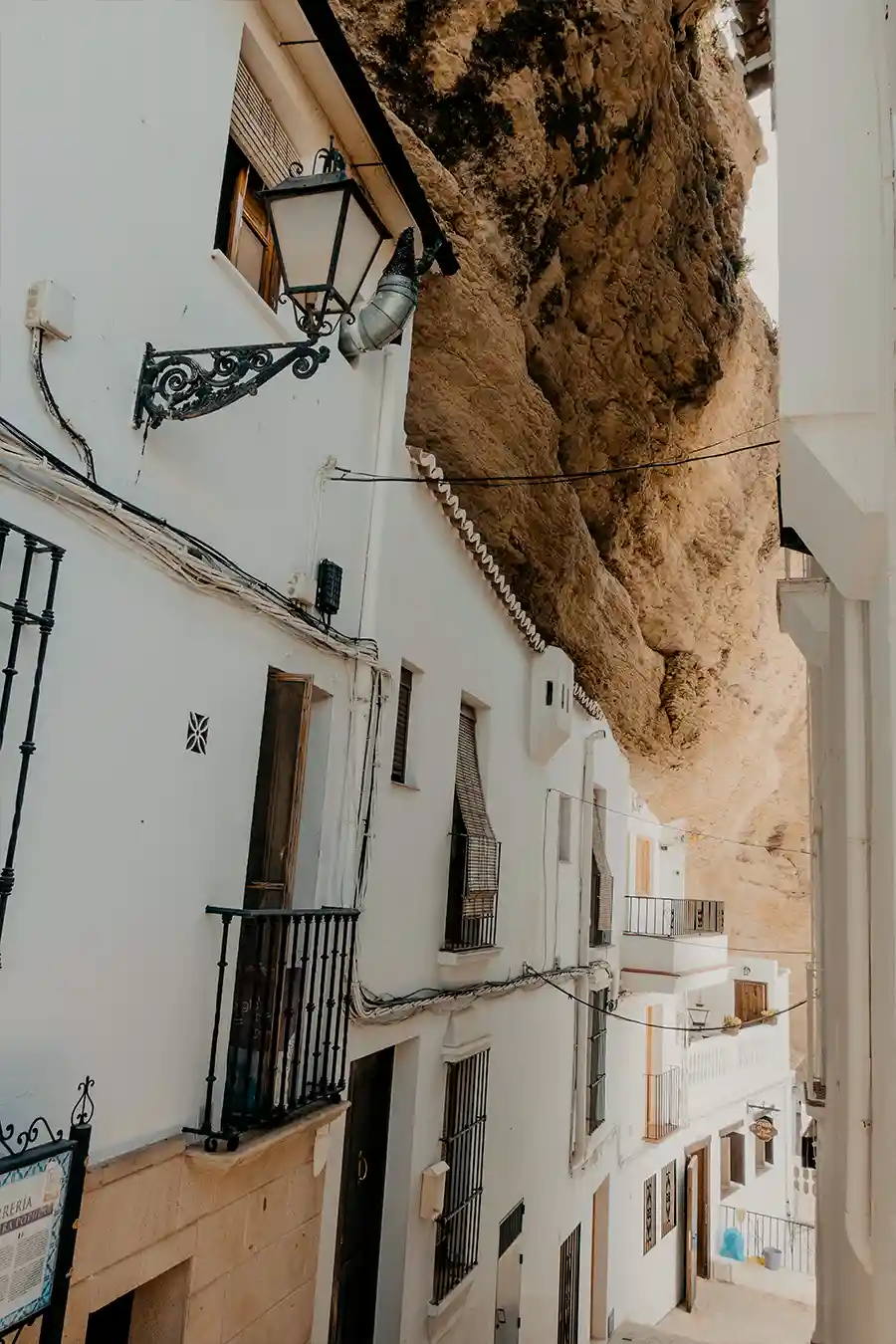

Castillo de Setenil de las Bodegas
Whether you’re a history enthusiast, a photography lover, or simply exploring the white villages near Ronda, a visit to Setenil Castle is an absolute must.
The fascinating history: 7 sieges, 1 victory
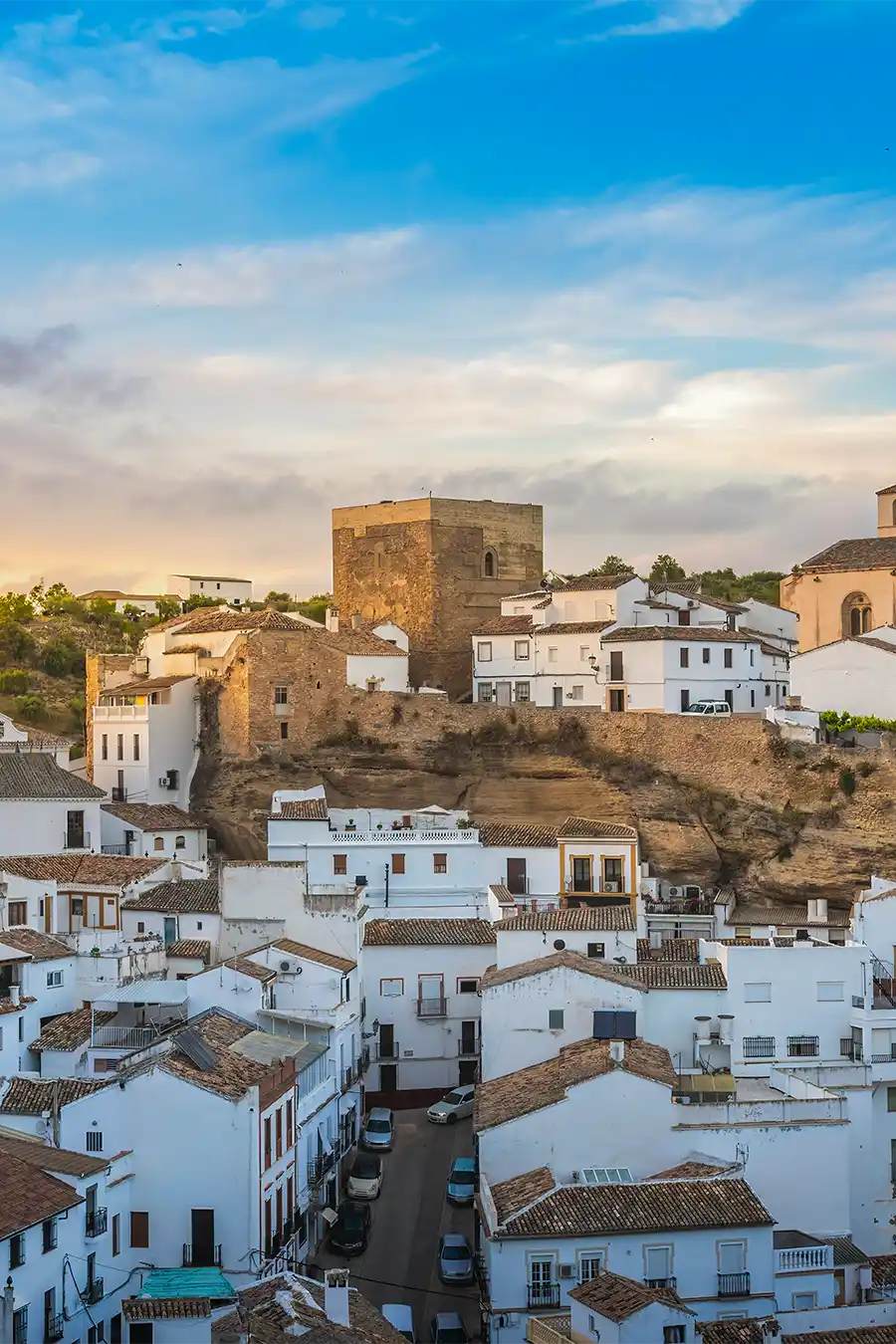
The castle’s origins date back to the Nasrid period when it formed part of the Kingdom of Granada’s. Strategically positioned on a rocky promontory overlooking the Trejo River valley, this fortress became legendary for its resistance against Christian forces during the Reconquista. The town’s very name, Setenil, derives from “Septem-nihil”—meaning “seven times nothing”—a reference to the seven failed attempts by Christian troops to conquer the stronghold.
It wasn’t until September 21, 1484, after the seventh siege, that the Catholic Monarchs finally captured the castle. This victory proved crucial in the Christian advance toward Granada. Local legend tells that during this final siege, Queen Isabella the Catholic gave birth to a son who died shortly after, inspiring the construction of Setenil’s first church dedicated to San Sebastián, now the town’s patron saint.
After the conquest, the castle gradually lost its military importance, but today it remains a powerful symbol of cultural transition between Islamic and Christian Andalusia.
What to see at the castle
Although time has taken its toll on much of the original structure, several significant elements survive to tell the castle’s story.
The Torreón del Homenaje
This is the best-preserved and most prominent element of the ancient alcázar. Built with a square floor plan using masonry construction with regular ashlar stonework at strategic points, the tower stands as a testament to medieval military architecture. From its summit, visitors are treated to spectacular 360-degree views of Setenil’s landscape, including the famous cave houses carved into the rock, the winding narrow streets below, and the lush Trejo River valley.
The Historic Walled Enclosure
While only fragments remain, you can still trace the outline of the defensive walls that once encircled the entire rocky promontory. These walls, constructed from rough irregular masonry with more refined stonework at vulnerable points, protected the medieval town during the Nasrid period. Walking through these ruins allows you to imagine the fortress at its peak and appreciate the fusion of military architecture with the dramatic natural landscape.
The Ancient Aljibe (Cistern)
At the foot of the Torre del Homenaje, visitors can explore the remarkably preserved aljibe—a rectangular cistern covered by two barrel vaults separated by pillars in line with semicircular arches. This essential water storage facility demonstrates the sophisticated engineering that allowed the fortress to withstand prolonged sieges.
Access and opening hours
The Castillo de Setenil is free to access and open to the public. However, visiting hours may vary depending on the season, so it’s advisable to check with the local tourist office or Setenil de las Bodegas Town Hall for current information before your visit.
Getting to the Castle: The journey is part of the experience
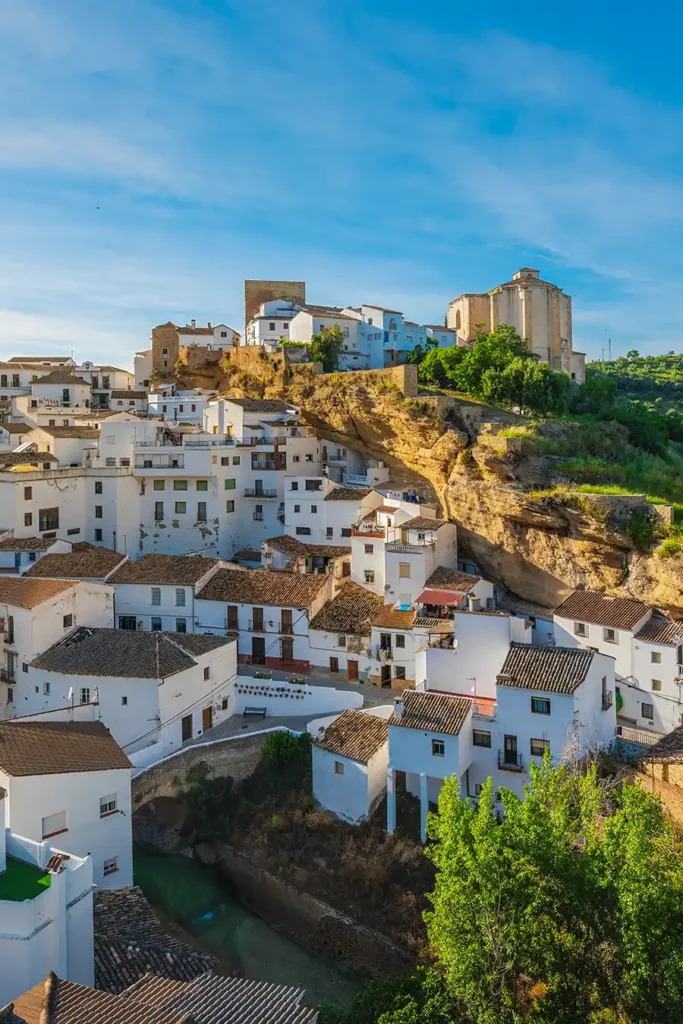
Reaching the Castillo de Setenil is an adventure in itself. The climb takes you through the steep, winding streets of Setenil, where you’ll pass traditional whitewashed houses, some spectacularly built into and beneath massive rock overhangs. Each turn in the cobblestone streets offers new perspectives of this remarkable town’s unique architecture.
As you approach the castle entrance, you’ll encounter one of Setenil’s characteristic signs featuring an inspiring message: “Lo mejor de Setenil está aquí y eres tú” (“The best thing about Setenil is here and it’s you”). This charming touch perfectly captures the welcoming spirit of this pueblo blanco.
Essential visiting tips
Wear comfortable, sturdy footwear
The streets leading to the castle are steep and paved with cobblestones, which can be slippery. Good walking shoes or hiking boots are highly recommended.
Timing your visit
Early morning or late afternoon visits are ideal, especially during summer months when midday temperatures can be intense. The lighting during golden hour also creates magical conditions for photography.
Allow adequate time
Plan at least 30-45 minutes to explore the castle ruins properly and enjoy the views. Factor in additional time for the climb up through the town and photo stops.
Frequently asked questions
Why visit the Castillo de Setenil?
Visiting this medieval fortress offers much more than a simple historical monument tour—it’s an immersive journey through Andalusian history, from the Nasrid Kingdom to the Catholic Monarchs’ reconquest. The castle represents centuries of cultural evolution and stands as a silent witness to the pivotal moments that shaped southern Spain.
How do I get to Setenil from Ronda?
Setenil de las Bodegas is located approximately 18 kilometers north of Ronda, making it an easy 20-25 minute drive. By car, take the A-374 road toward Olvera. The route is well-signposted and offers scenic views of the Andalusian countryside. Once you arrive in Setenil, follow signs to the historic center (Centro Histórico). Parking is available at the entrance to the old town, and from there it’s a 10-15 minute uphill walk through the charming streets to reach the castle. Public bus services also connect Ronda and Setenil, though schedules may be limited, so check current timetables at Ronda’s bus station before planning your trip.
Is the Castle free to visit?
Yes, access to the Castillo de Setenil and the Torre del Homenaje is completely free. There are no entrance fees or tickets required, making it an excellent budget-friendly attraction for travelers exploring the region.
What other attractions can I see in Setenil de las Bodegas?
Setenil offers numerous fascinating attractions beyond the castle:
Cuevas de la Sombra and Cuevas del Sol – These are Setenil’s most famous features: entire streets of houses built directly into and beneath massive rock overhangs. The Calle Cuevas de la Sombra (Shadow Caves Street) remains cool even in summer, while Calle Cuevas del Sol (Sun Caves Street) captures more sunlight. These unique cave streets are unlike anything else in Spain.
Church of Nuestra Señora de la Encarnación – This 16th-century church built on the site of the former mosque features a beautiful blend of Gothic and Renaissance architectural styles.
The Old Town – Wander through the narrow, winding streets of whitewashed houses, cross the picturesque bridges over the Río Trejo, and discover hidden plazas and viewpoints.
Local gastronomy – Setenil is renowned for its tapas bars and traditional restaurants. Don’t miss trying the local chorizo, pork dishes, and sweets made with almonds and honey. Many bars are literally carved into the rock.
Mirador viewpoints – Besides the castle, there are several excellent viewpoints around town offering different perspectives of Setenil’s unique geography.