

One-day Route through Ronda's Best Streets
Want to experience the real Ronda beyond the tourist spots? This walking route takes you through the heart of the city, from bustling commercial streets to hidden viewpoints and historic landmarks. Start in the morning and spend a full day discovering Ronda like a local, street by street.
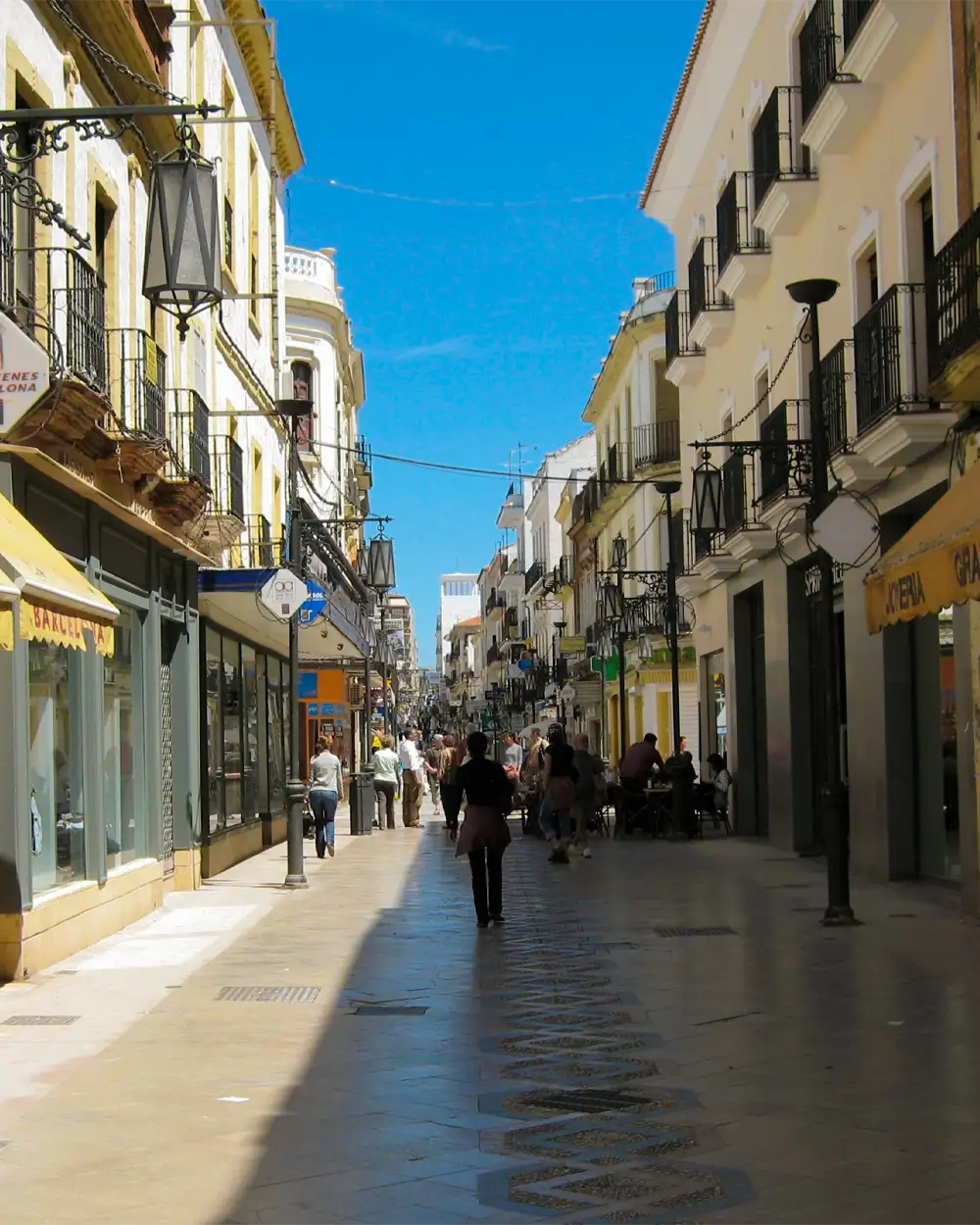
1. Calle Espinel: Ronda's Commercial Heart
Begin your day on Calle Espinel, affectionately known as “La Bola” by locals. This is Ronda’s main commercial artery, where the city truly comes alive. As you stroll down this pedestrian street, you’ll be surrounded by traditional shops, modern boutiques, inviting tapas bars, and cafés where locals start their mornings with café con leche and tostada.
Take your time browsing the shop windows and soaking in the authentic Ronda atmosphere. The street leads you naturally to Plaza del Socorro, one of the most beloved squares in the city. This is where locals gather, especially during evening paseos, and it’s the perfect spot to understand Ronda’s social fabric before diving into the more monumental areas.
2. Calle Virgen de la Paz: Ascending to the Bullring
From Plaza del Socorro, head up Calle Virgen de la Paz. This gentle climb takes you toward one of Ronda’s most iconic landmarks. The street itself offers glimpses of local life, with residential buildings mixing with small businesses.
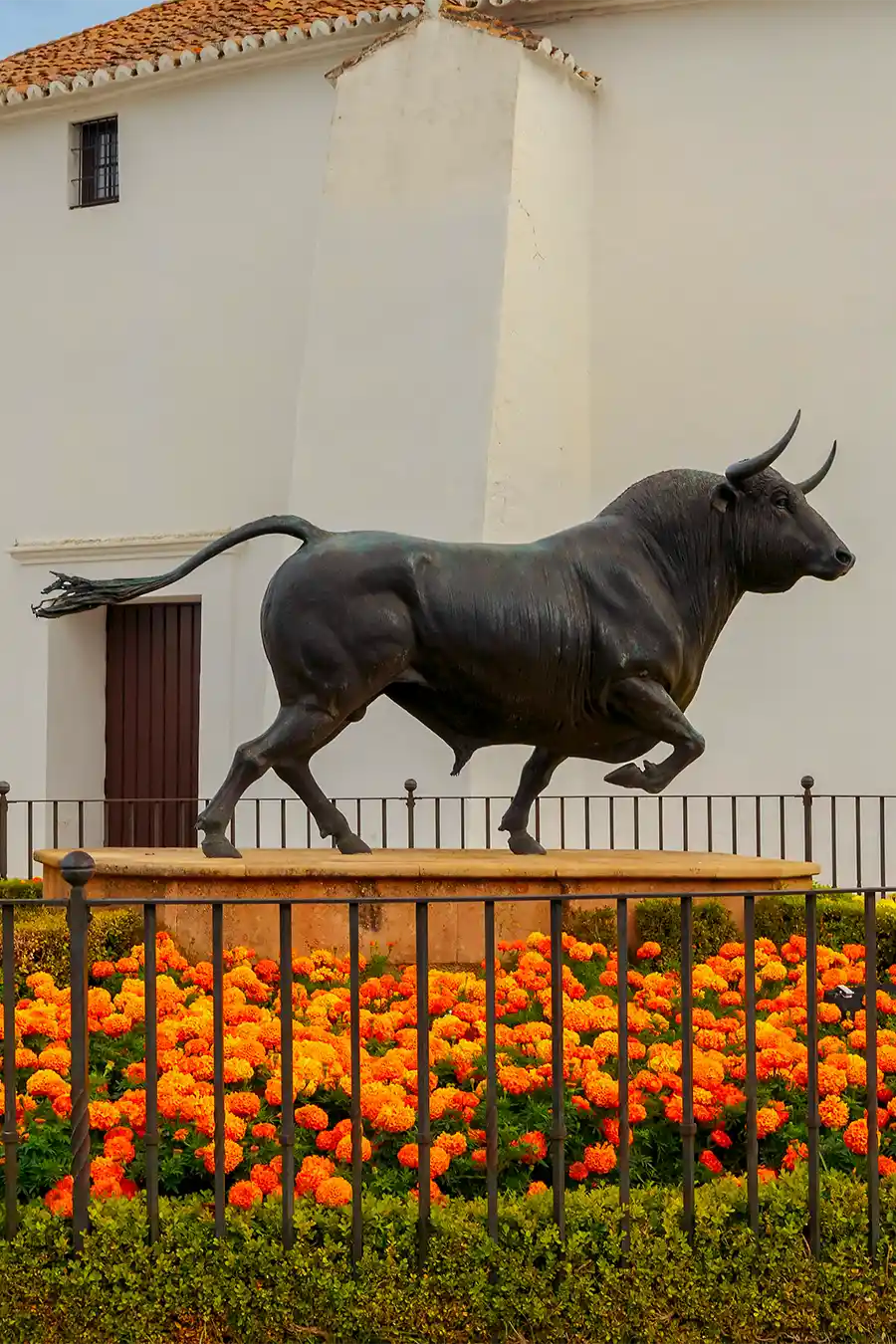
Your destination here is the Plaza de Toros, one of the oldest and most beautiful bullrings in Spain. Even if you’re not interested in bullfighting, the architecture alone is worth the visit. The neoclassical facade and the museum inside tell the story of Ronda’s pivotal role in the history of modern bullfighting. This is where the Romero dynasty revolutionized the sport in the 18th century.
3. Paseo de Blas Infante: Where Views Steal Your Breath
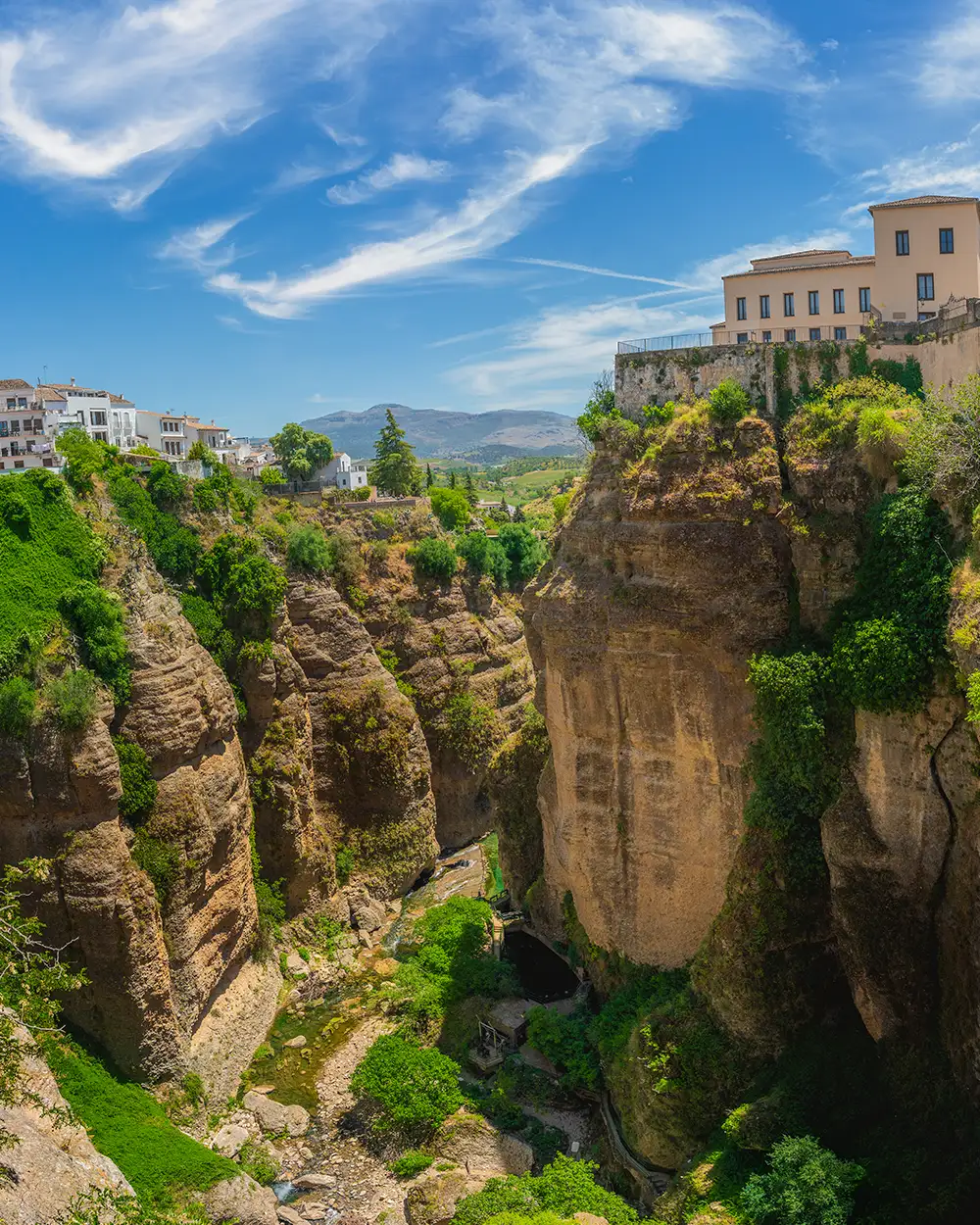
Cross over to Paseo de Blas Infante, and prepare for your first dramatic encounter with El Tajo, the gorge that splits Ronda in two. This promenade is lined with viewpoints, each offering a different perspective of the cliffs, the valley below, and the whitewashed houses clinging to the precipice.
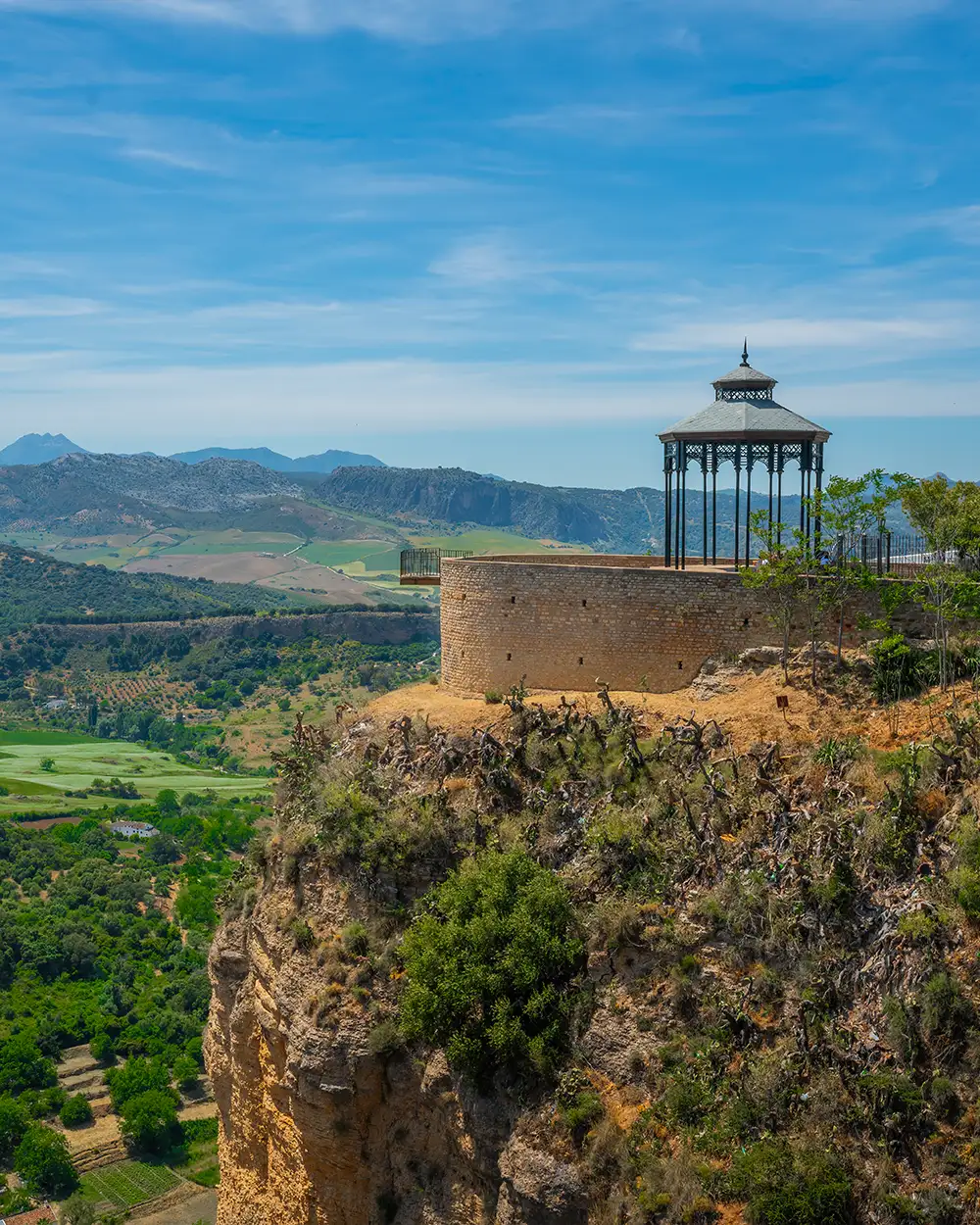
Don’t miss the Mirador de la Sevillana, recognizable by its distinctive dome. From here, you’ll have sweeping views of the plains stretching out below the Tajo—a patchwork of olive groves, farmland, and distant mountains that showcase the agricultural beauty of the Serranía de Ronda. In the gardens along the promenade, you’ll also find a statue of Orson Welles, the legendary filmmaker who fell in love with Ronda and requested his ashes be scattered here. It’s a touching tribute to one of the city’s most famous admirers.
4. Calle Armiñán: The Road to Spain's Most Famous Bridge
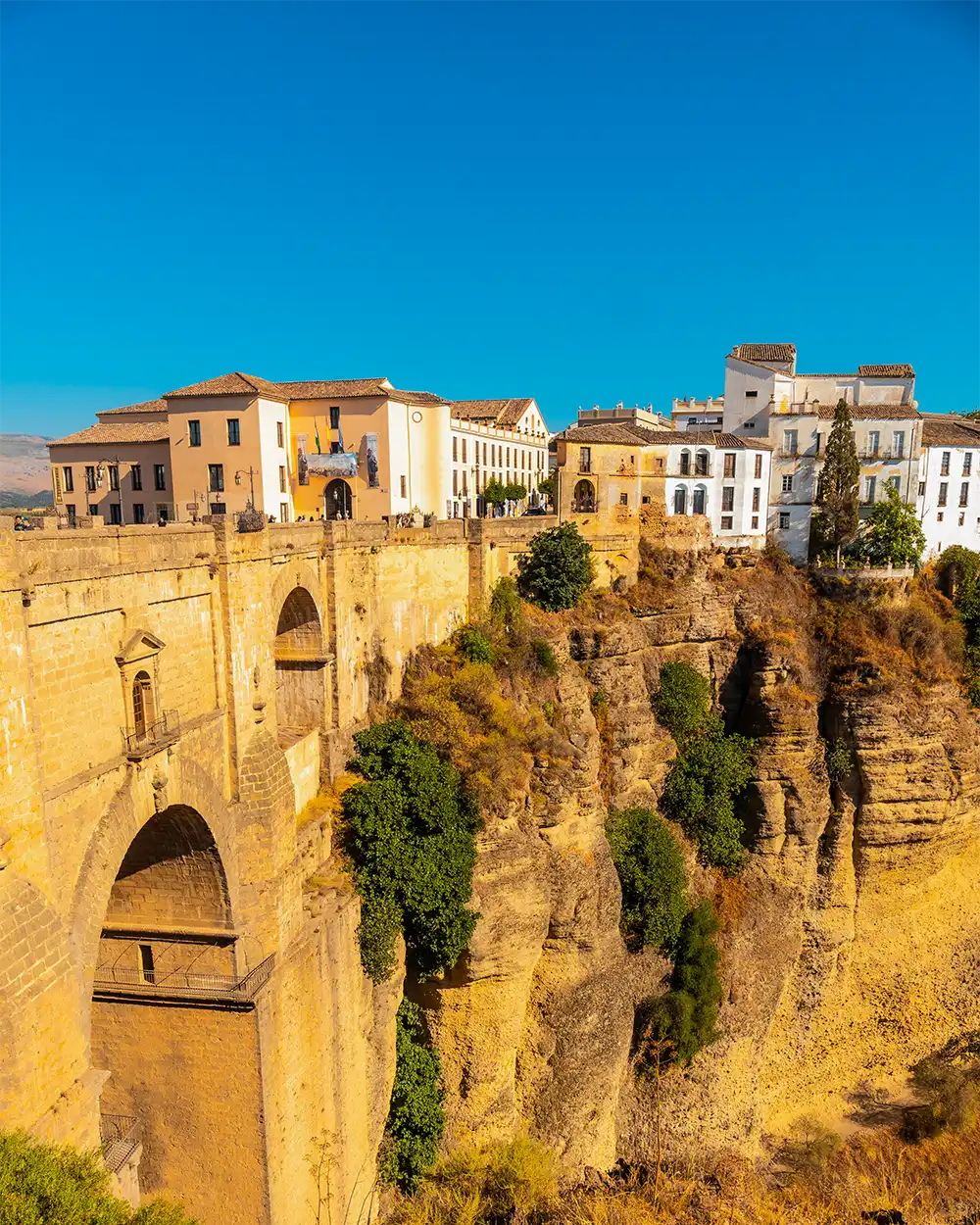
Continue along Calle Armiñán, an elegant street that builds anticipation as you approach Ronda’s crown jewel: the Puente Nuevo. This 18th-century bridge is arguably Spain’s most photographed landmark, spanning the 120-meter-deep gorge with breathtaking audacity.
Once you cross the bridge into the old town, pause at the Mirador de Aldehuela for the classic view looking back at the New Bridge. Just steps away, you’ll find the Mirador de los Viajeros Románticos, featuring a beautiful mural that pays homage to the 19th-century travelers who put Ronda on the romantic tourism map.
Before leaving this area, visit the Museo Lara, an eccentric private collection housed in a historic building. It’s filled with curiosities ranging from antique clocks to witchcraft artifacts—a wonderfully quirky detour that reveals another side of Ronda’s cultural wealth.
5. Calle Tenorio: Into the Historic Quarter
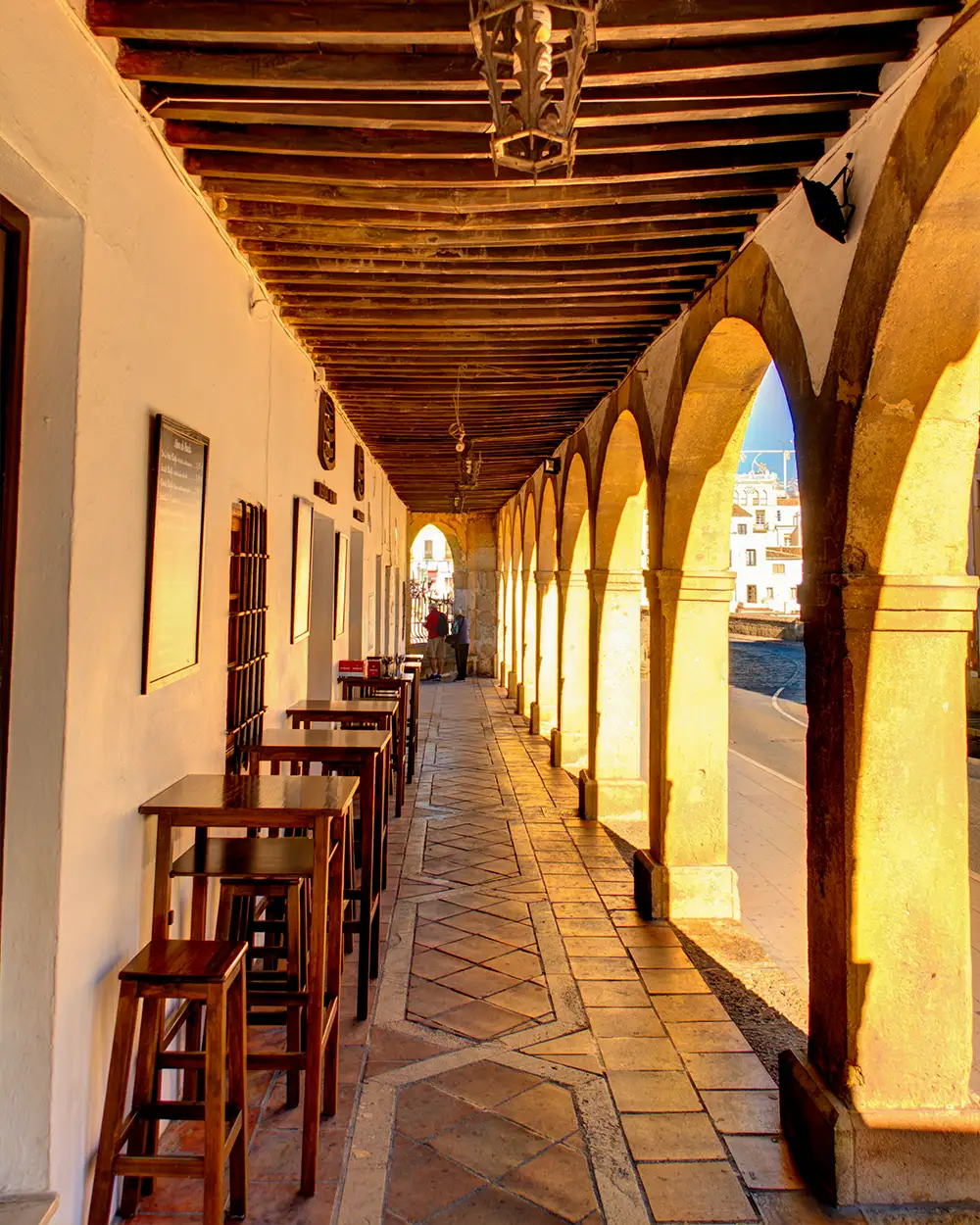
Follow Calle Tenorio deeper into Ronda’s old town. This street takes you through the medieval heart of the city, where narrow lanes and traditional architecture transport you centuries back.
Make a stop at the Casa Museo Don Bosco, a beautifully preserved house museum with stunning gardens and yet more viewpoints over the gorge. The interiors showcase period furniture and decorative arts, while the terraced gardens offer some of the most serene spots in the entire city.
Along this street, you’ll also find several smaller miradors worth brief detours. Each offers a slightly different angle on the landscape, and locals know that sometimes the best views are the unexpected ones tucked away from the main tourist flow.
6. Plaza de María Auxiliadora: The Best View from Below
From Plaza de María Auxiliadora, take the path that descends to the lower viewpoint of the Puente Nuevo. This is where you truly understand the engineering feat of the bridge—looking up from the bottom of the gorge gives you a completely different perspective than looking down from the top.
The walk down is steep but manageable, and absolutely worth it. Once you’ve captured your photos and caught your breath, climb back up to the plaza to continue your route.
7. Plaza Duquesa de Parcent: Ronda's Most Beautiful Square
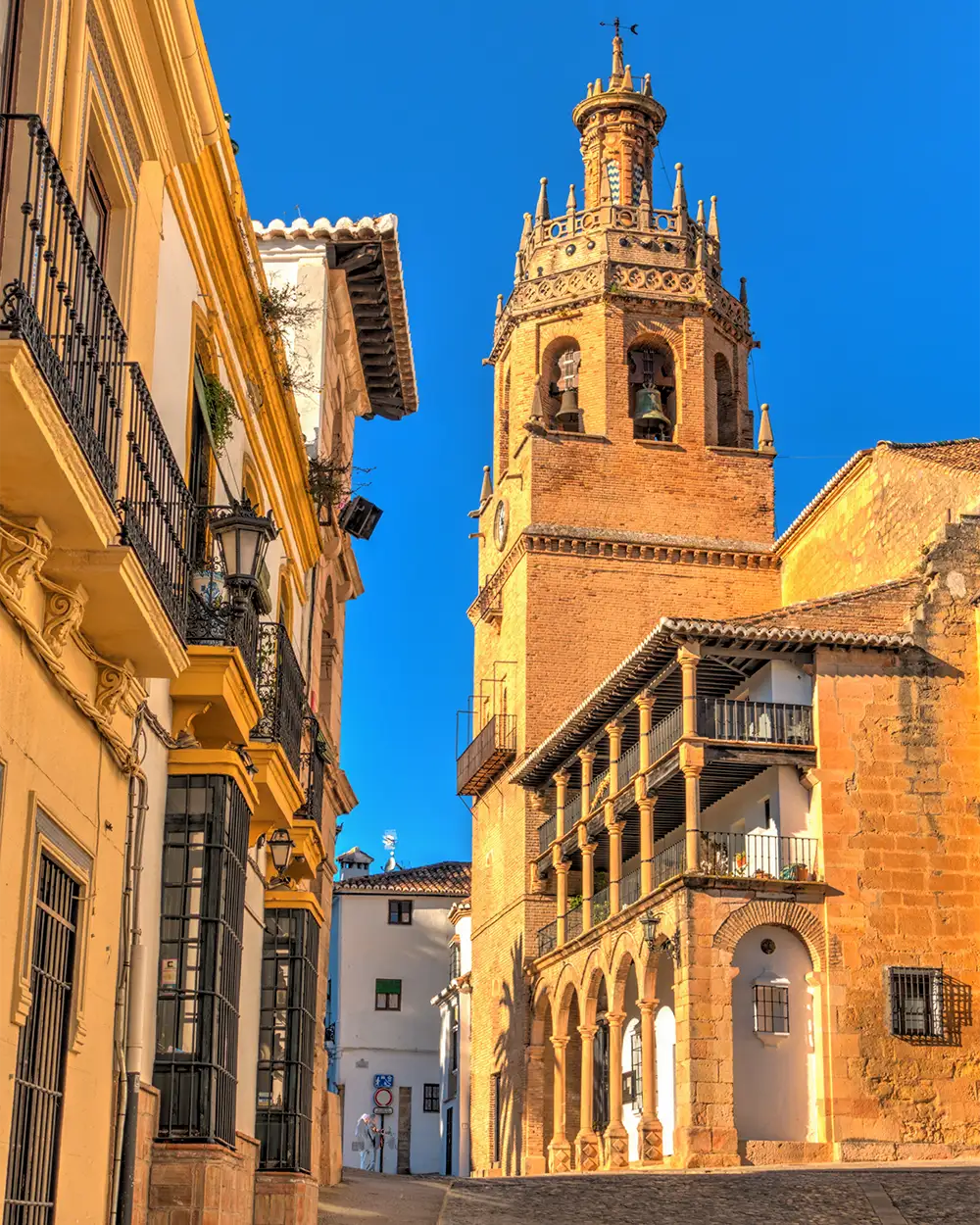
Head toward Plaza Duquesa de Parcent, widely considered the most beautiful square in Ronda. This elegant space is the historic and spiritual heart of the old town, surrounded by stunning architecture that spans several centuries.
The centerpiece is the Iglesia de Santa María la Mayor, Ronda’s main church. Built on the site of a former mosque, this magnificent building showcases a fascinating mix of Gothic, Renaissance, and Baroque styles. The Mudéjar tower—originally the mosque’s minaret—still stands, while inside you’ll find an impressive Renaissance altarpiece and a beautiful choir.
But Plaza Duquesa de Parcent isn’t just about monuments. This is one of the best spots in Ronda to stop for tapas or a proper meal. The square is lined with excellent restaurants and bars where you can sit on a terrace, enjoy the architecture around you, and sample local specialties. It’s the perfect midday break—refuel here before continuing your exploration. The timing couldn’t be better, as you’re roughly halfway through the route.
From the plaza, walk toward Plaza del Gigante, where you’ll find another small museum worth a visit if you have time. The Museo del Gigante focuses on local history and archaeology.
8. Calle Marqués de Salvatierra: Moorish Echoes and Hidden Gems
Calle Marqués de Salvatierra is where Ronda’s layered history becomes most tangible. Right at the beginning of the street stands the Alminar de San Sebastián, the preserved minaret of a former mosque, a reminder of Ronda’s centuries under Moorish rule.
If you’re up for it, make the optional detour to the Casa del Rey Moro (House of the Moorish King) and its famous water mine. The gardens are spectacular, but the real adventure is descending the 14th-century staircase carved into the rock—more than 200 steps down to the river that once supplied the city with water during sieges.
Continuing along this street, you’ll pass the Puente Viejo (Old Bridge), another historic crossing of the gorge, and walk alongside remnants of the medieval city walls. Pass through the Arco de Felipe V, a gate in the fortifications, and you’ve traced Ronda’s defensive perimeter.
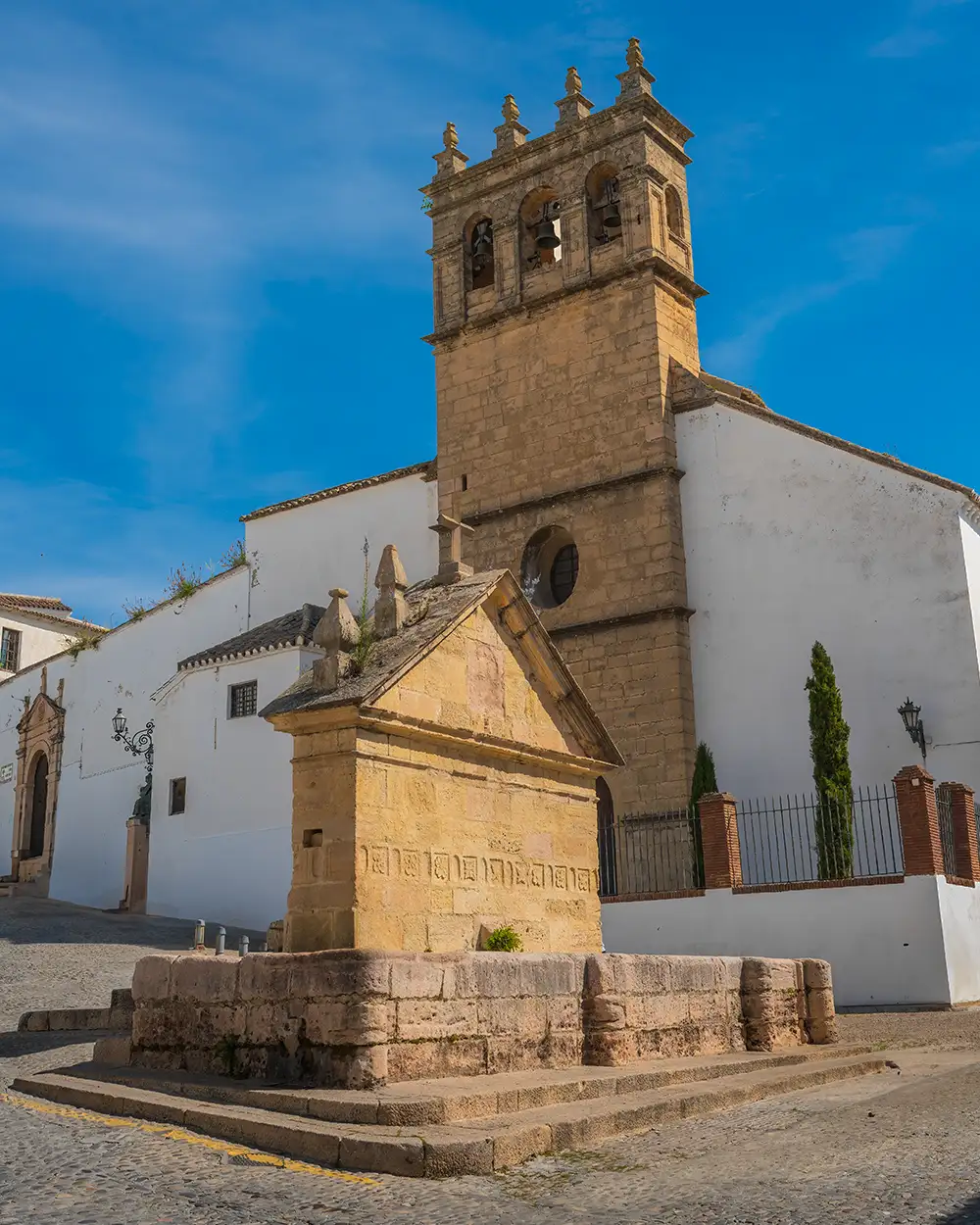
9. Calle Real: Cobblestones and Flowing Water
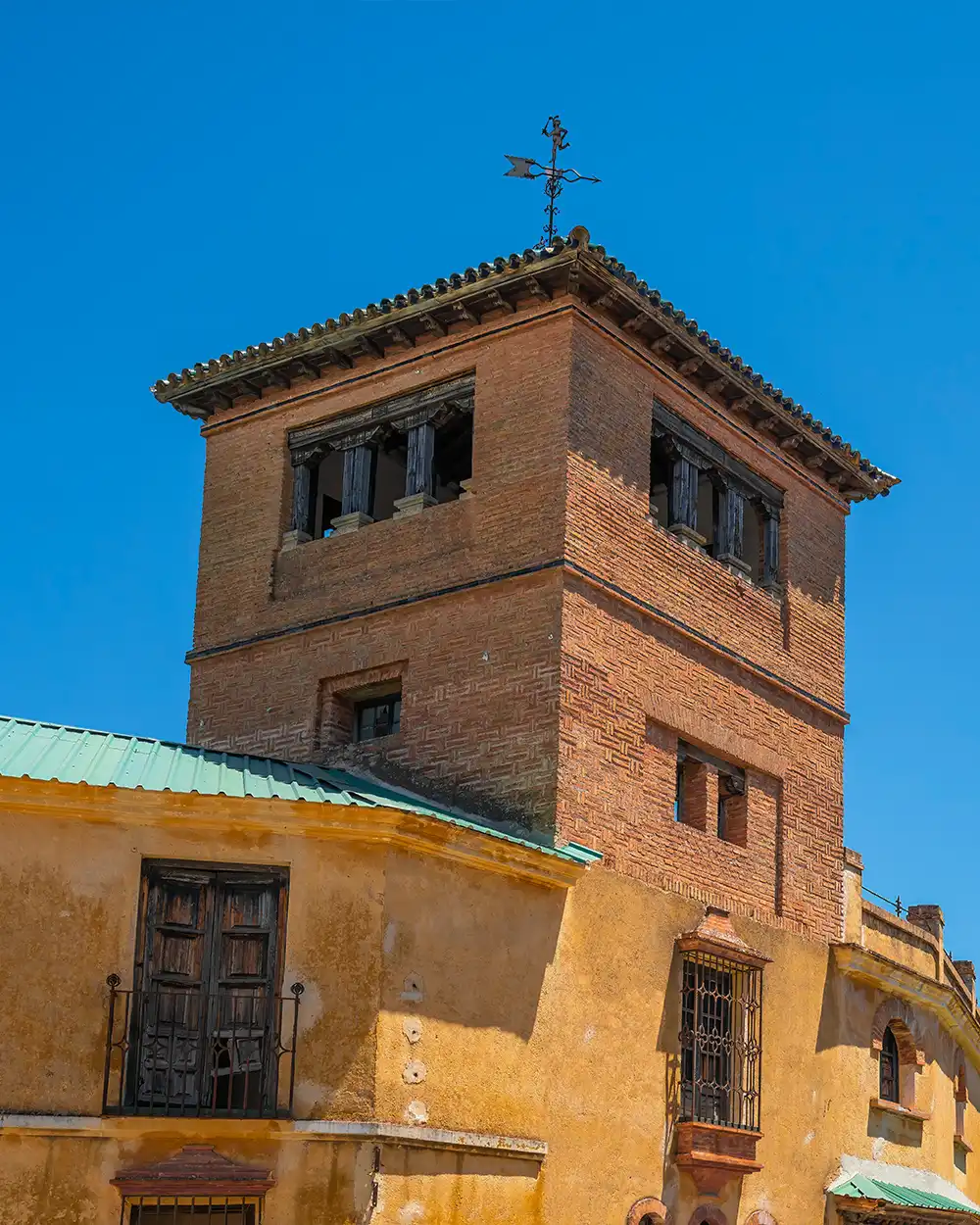
Calle Real has recently been restored to its former glory, and it’s now one of the most charming streets in Ronda. The centerpiece is the Fuente de los Ocho Caños (Fountain of Eight Spouts), a Renaissance-era fountain that has quenched the thirst of Rondeños for centuries.
The newly cobblestoned street is lined with beautiful trees that provide welcome shade, and the traditional architecture on either side has been lovingly maintained. This is a perfect spot for lunch or a late-afternoon drink—there are several excellent local restaurants here where you can refuel for the final leg of your route.
Take your time on this street. It represents Ronda at its most authentic: beautiful, historic, and still very much lived-in by locals who pass by on their daily errands.
10. Calle Molino de Alarcón: A Refreshing Finale
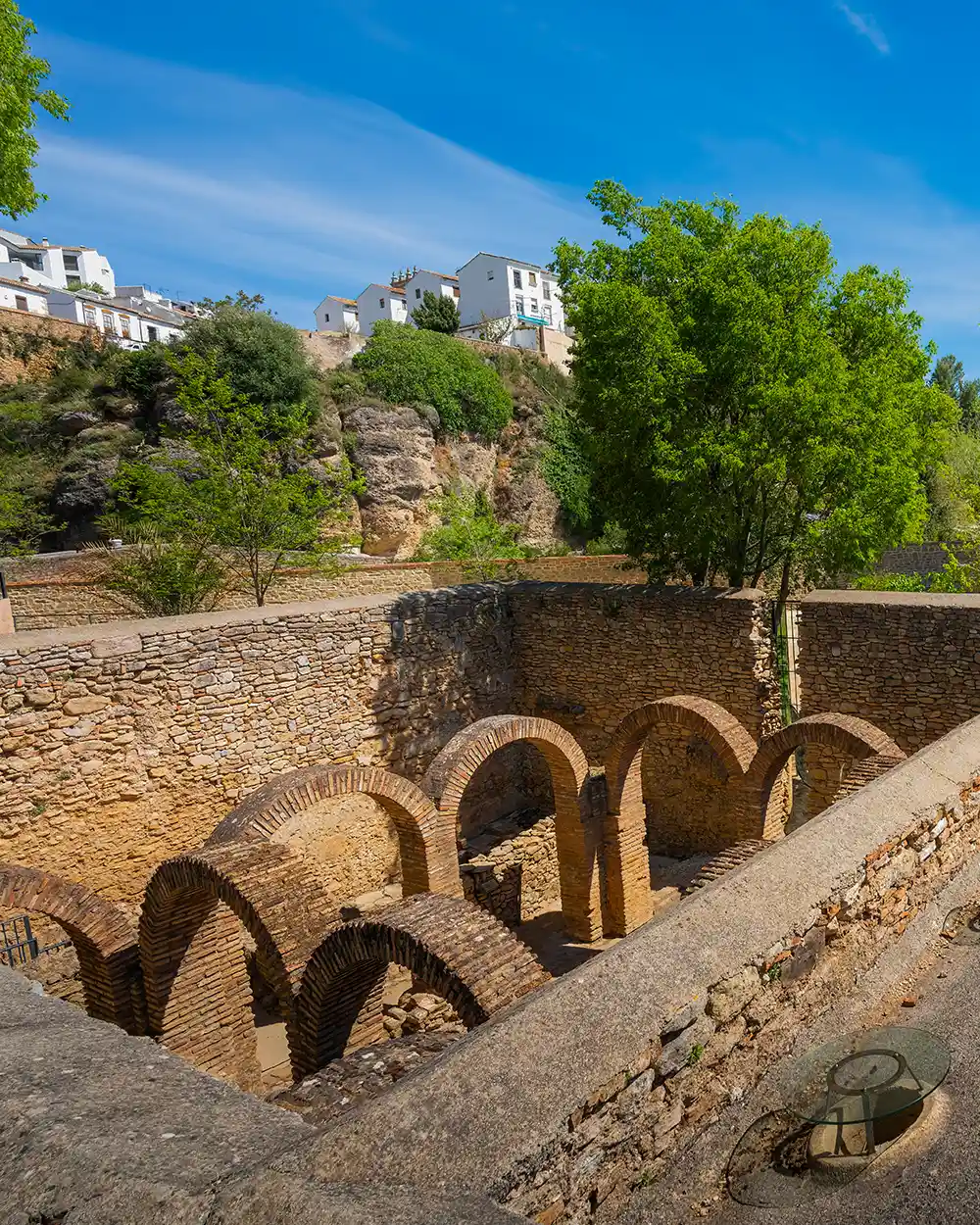
End your walking route with Calle Molino de Alarcón, which leads you to two final treasures: the Puente de San Miguel and the Baños Árabes (Arab Baths).
The Puente de San Miguel is a quieter, older bridge that many tourists miss, making it a peaceful spot to reflect on your day. The Arab Baths below are among the best-preserved in Spain, dating from the 13th and 14th centuries. The horseshoe arches and the star-shaped skylights create an atmospheric space where you can imagine the social life of medieval Ronda.
This is the perfect place to end your journey—cooler, quieter, and steeped in the kind of history that makes Ronda unforgettable. By now, you’ve walked through a thousand years of history, from Moorish minarets to 18th-century engineering marvels, all while experiencing the daily rhythm of a city that has mastered the art of preserving its past while living fully in the present.
Frequently asked questions
How long does it take to walk this route through Ronda?
The complete route takes a full day, typically 6-8 hours including stops at viewpoints, museums, and breaks for meals. Starting in the morning is ideal.
Is the walking route through Ronda's streets difficult?
The route involves moderate walking with several hills and staircases, particularly when descending to the lower viewpoint of Puente Nuevo and exploring the water mine. Comfortable walking shoes are essential.
What's the best time of year to do this walking route in Ronda?
Spring (March-May) and autumn (September-November) offer the most pleasant temperatures. Summer can be very hot, so start early if visiting between June and August.
Where should I stop for lunch on this route?
Plaza Duquesa de Parcent is an excellent lunch stop, roughly midway through the route. There are also good options near Plaza del Socorro if you want to eat earlier, or near the Arab Baths at the end if you prefer a late lunch.