

Alameda del Tajo Park in Ronda
The Alameda del Tajo isn’t just another park. It’s Ronda’s green heart, a 19th-century garden that defies logic by existing right on the edge of one of Spain’s most dramatic natural formations. As a local who has walked these tree-lined paths countless times, I can tell you this place holds secrets that most guidebooks miss.
A Park Born from Profanity
The story of how the Alameda came to be is one of my favorites to share. In the late 18th century, Ronda’s mayor, Don Joaquín Varcárcel y Rico, Marqués de Pejas, had a vision: to transform what was essentially a garbage dump in front of the Mercedarian convent into a proper public promenade. The problem? No money in the public coffers.
His solution was brilliantly creative. He decreed that anyone caught swearing or behaving lewdly in public would be fined, with all proceeds going toward the park’s construction. According to historical accounts, the project generated enough funds to plant all those trees—which tells you something about the colorful language of 18th-century Ronda!
The work began but was interrupted, finally being completed in 1806 under Mayor Vicente Cano. The original design was a rectangle measuring 178 meters long by 77 meters wide, divided into seven tree-lined avenues filled with poplars (álamos in Spanish, which gives the park its name—alameda literally means “poplar grove”).
The poet Rainer Maria Rilke, who stayed at the Hotel Reina Victoria (that large Swiss chalet-style building visible from the park), wrote that there couldn’t be “a more unexpected sight in the world” than the views from here. Jorge Luis Borges, though nearly blind during his visit, said he heard “memories of deserts” in the water. They weren’t exaggerating.
The 2023 Renovation: A Return to Glory
I’ve watched the Alameda transform over the years, but nothing compares to the recent 2023 renovation by architect Sergio Valadez, who also worked on restoring Calle Real. The improvements have been stunning. The goal was to recapture the essence of the park’s 19th-century splendor, and they’ve succeeded beautifully.
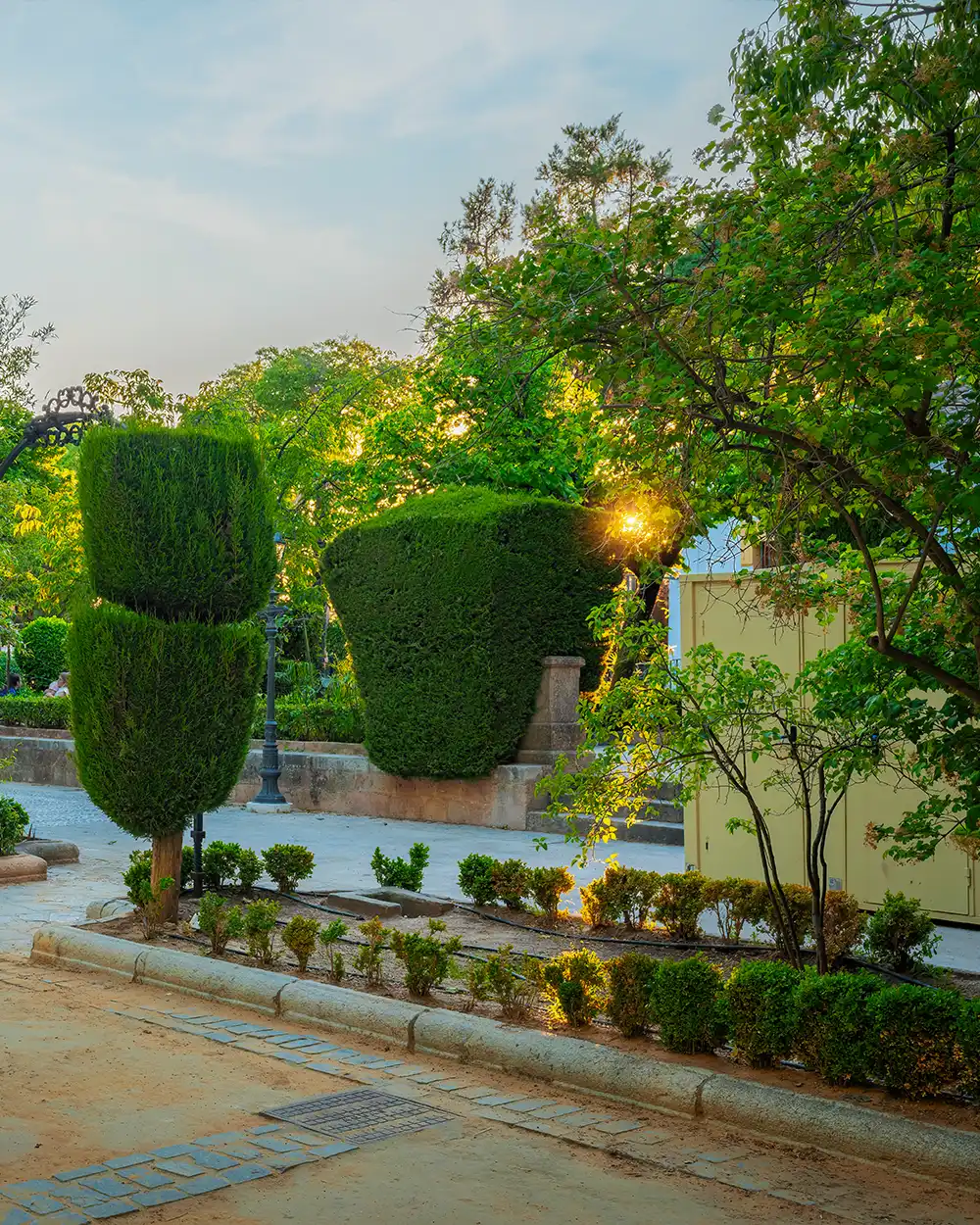
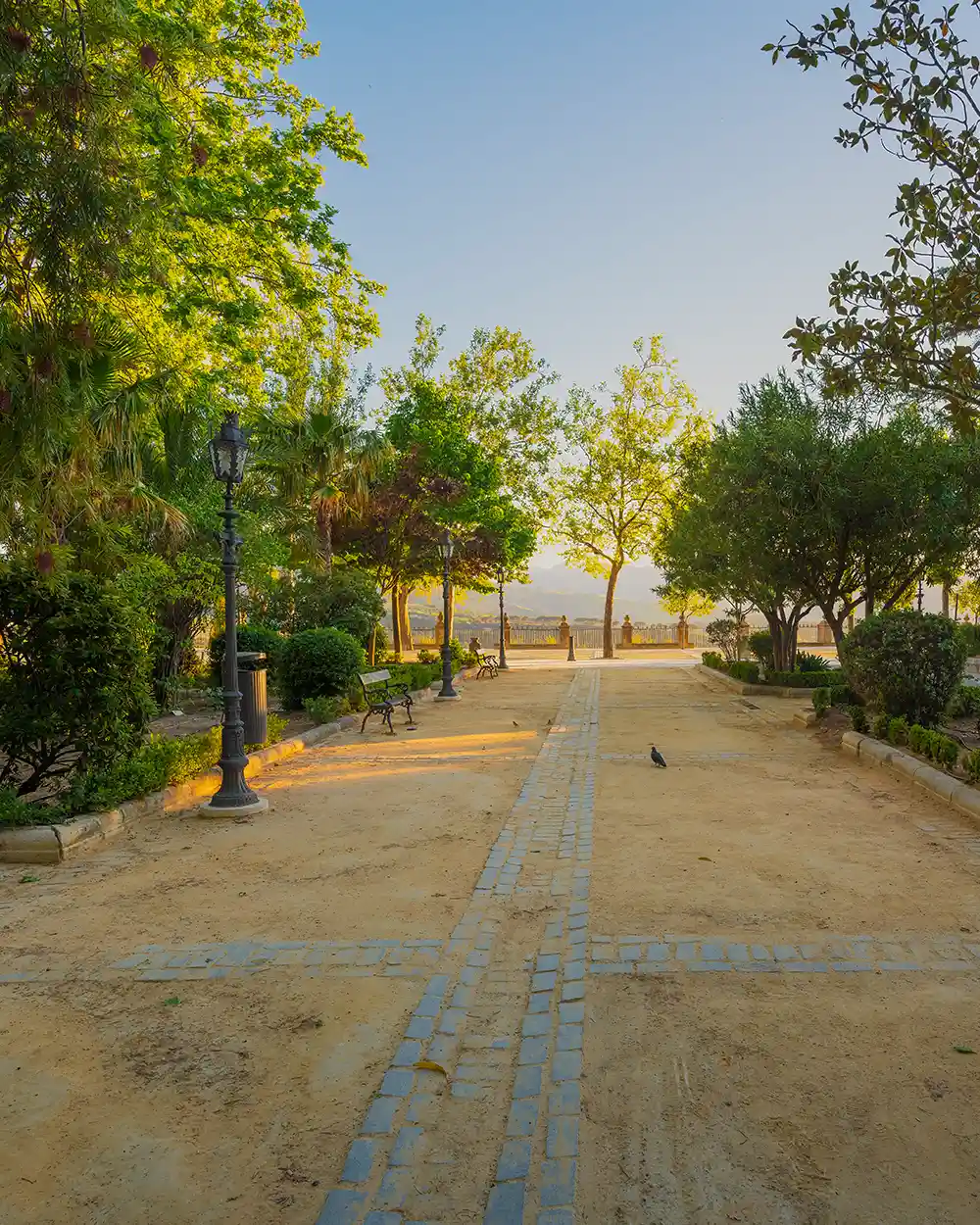
Walking through now, you’ll notice the meticulously restored gardens and the new pavements featuring gorgeous floor mosaics that echo the park’s historical character. The geometric Mediterranean garden design—typical of Andalusian parks before the English garden style took over—has been carefully preserved. Unlike modern parks dominated by grass, the Alameda maintains its traditional layout with hedges delimiting flower beds where mature trees, shrubs, and herbaceous plants create layers of green.
The Parks and Gardens
The Alameda is home to some remarkable trees. You’ll find Himalayan cedars, acacia pines, and various other species typical of ornamental gardening in Málaga province. The five main avenues create shaded walks perfect for hot Andalusian afternoons.
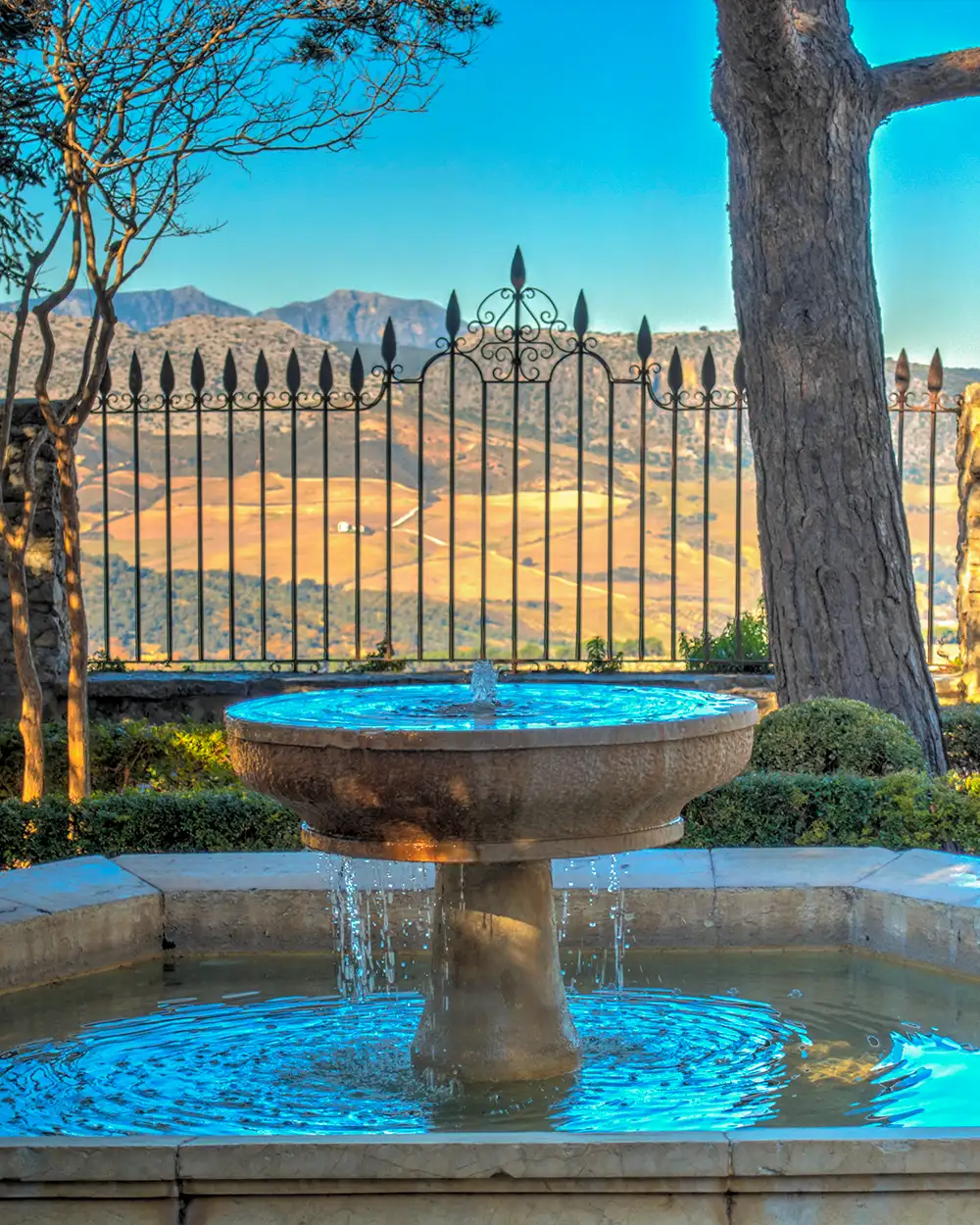
As you wander, look for the 14 stone benches installed during the 1860-70 renovations and the cast-iron seats that replaced wooden ones in 1867—they’re the same ones you’ll sit on today. Four fountains dot the gardens, surrounded by pergolas twisted with roses that even found their way into James Joyce’s “Finnegans Wake.”
When the Park Was Full of Life
I have to share a bittersweet memory from my childhood. The Alameda used to be much more than just trees and flowers—it was alive with animals. The central pond was home to ducks and geese that would waddle around the paths, much to the delight of children. Fish swam in the fountains, and most spectacularly, there were peacocks kept in enclosures where the children’s playground now stands.
As a kid, seeing those peacocks display their magnificent tail feathers was magical. Sadly, over the years, the animals were gradually removed. If you look carefully at the pond near the children’s play area, you can still see the small houses where the ducks once lived—a quiet reminder of when the park had a different kind of charm. It’s one of those changes that progress brings, though I sometimes miss the quacking soundtrack of my childhood visits.
In the center, you’ll find the circular alberca (pool) in La Glorieta, which was transformed from its original octagonal shape in 1884 to increase water storage for irrigation. The cast-iron railings that enclose the gardens also date from this era, giving the park its distinctive character.
The park hosts the Vicente Espinel Theater, though I’ll be honest—as a local, I have mixed feelings about this modern addition. While it serves its purpose, the building doesn’t quite match the classical surroundings. But that’s part of Ronda’s charm: layers of history, not always in perfect harmony.
The Viewpoints: Where Beauty Meets Vertigo
Balcón del Coño
Let’s address the elephant in the room—or rather, the balcony with the unprintable name. El Balcón del Coño is the most famous mirador in all of Ronda, located just beyond the car park beside the bullring.
The nickname comes from visitors’ instinctive reaction upon approaching the edge and looking down into the 120-meter abyss: “Ay, coño!” (a Spanish expletive I’ll leave untranslated). It happens so often it’s become the unofficial name. I’ve stood there hundreds of times, and I still get that flutter in my stomach when I peer over.
Other Miradores Along the Alameda
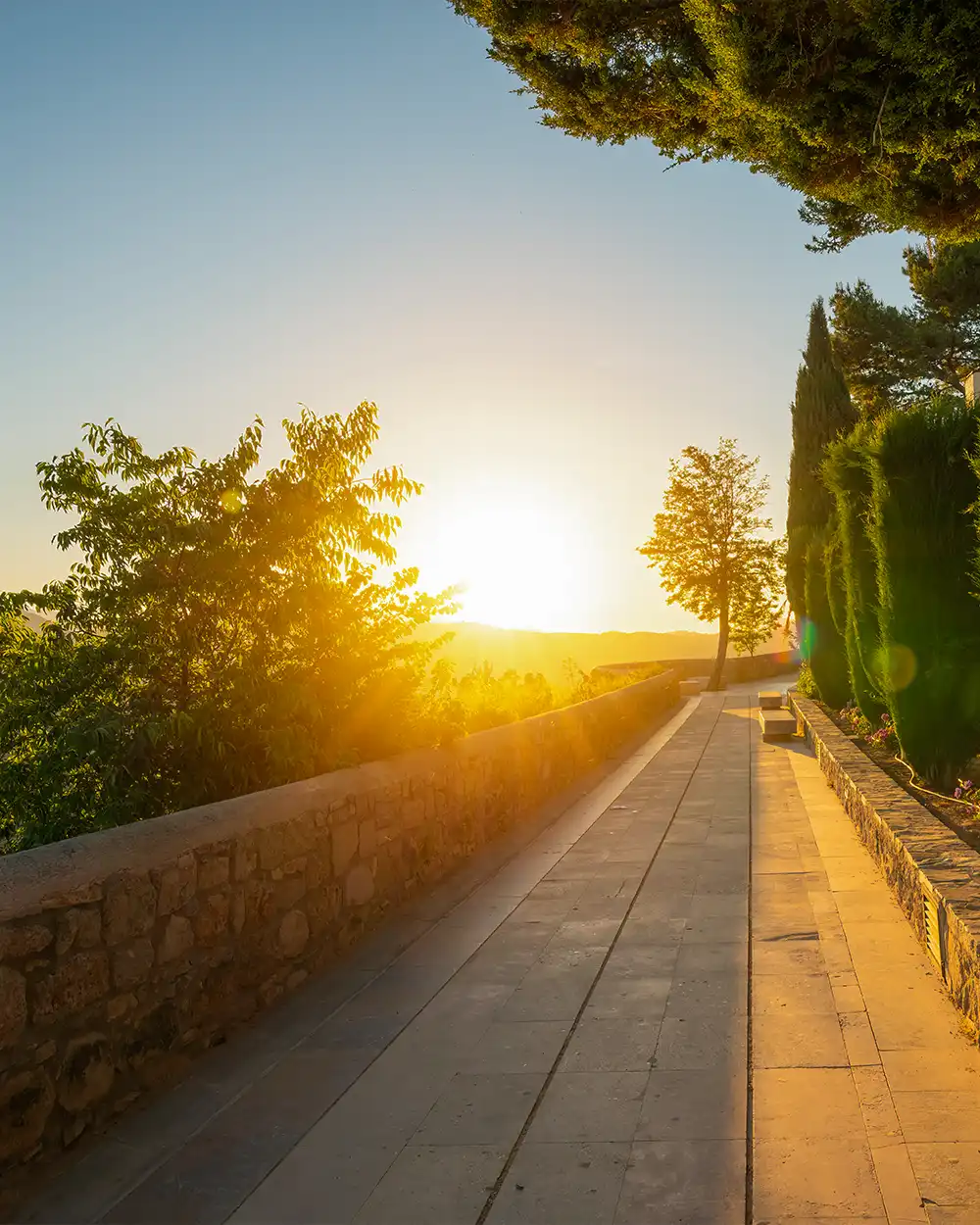
The Alameda offers multiple viewpoints along its cliff-side edge, each with its own character. Sunset is magical here—whole families gather on summer evenings for the paseo (evening stroll), watching the sun paint the mountains in shades of orange and purple.
Ronda Romántica: The Alameda Comes Alive
In recent years, the Alameda has become the main venue for Ronda Romántica, our annual festival celebrating the city’s 19th-century golden age. If you’re lucky enough to visit during this event (typically held in May), you’ll find the park transformed with period-dressed locals, artisan stalls, and traditional food vendors.
The Paseo de lo Ingleses: A Walk on the Edge
If you have a good head for heights and want to experience something truly special, don’t miss the Paseo de los Ingleses (Walk of the English). This pathway runs along the cliff face below the Alameda, offering an entirely different perspective of the gorge.
The name comes from English tourists who popularized this walk in the 19th century during Ronda’s Romantic era, when the town became a must-visit destination for European travelers seeking the exotic and dramatic. Walking this path, you’ll understand why they were so captivated. The trail clings to the rock face, with the gorge dropping away on one side and the cliff rising on the other.
It’s not for the faint-hearted, but it’s perfectly safe with proper railings. The views are spectacular, and you’ll see the city from angles impossible from above. You can access the path from near the Jardines de Cuenca at the bottom of the gorge—a beautiful spot in its own right that I recommend exploring if you have time. The Jardines de Cuenca offer another peaceful green space with entirely different views.
Practical Information
Whether you come for the views, the history, the trees, or simply to understand why poets and writers have been captivated by this spot for two centuries, the Alameda delivers. Just watch your language when you reach the edge—though after 200 years, those poplar trees have probably heard it all.
Location: The Alameda del Tajo is located in the Mercadillo (newer part) of Ronda, easily accessible from the Plaza de Toros and the main tourist area.
How to Get There: From the Puente Nuevo, it’s about a 5-minute walk. If you’re arriving by car, check our parking guide for the best spots nearby.
Best Times to Visit:
- Early morning for peaceful walks before the crowds
- Late afternoon/evening for the paseo tradition and sunset views
- Autumn for the most spectacular colors
- During Ronda Romántica for the full historical experience
Entry: Free and open daily
Nearby Attractions: The Alameda is perfectly positioned for exploring Ronda’s top attractions. You’re within easy walking distance of the bullring, Puente Nuevo, and the old town.
Want more insider tips for exploring Ronda? Check out our complete guide to the best things to do in Ronda and discover all the hidden gems this magical city has to offer.
Frequently asked questions
How long does it take to walk this route through Ronda?
The complete route takes a full day, typically 6-8 hours including stops at viewpoints, museums, and breaks for meals. Starting in the morning is ideal.
Is the walking route through Ronda's streets difficult?
The route involves moderate walking with several hills and staircases, particularly when descending to the lower viewpoint of Puente Nuevo and exploring the water mine. Comfortable walking shoes are essential.
What's the best time of year to do this walking route in Ronda?
Spring (March-May) and autumn (September-November) offer the most pleasant temperatures. Summer can be very hot, so start early if visiting between June and August.
Where should I stop for lunch on this route?
Plaza Duquesa de Parcent is an excellent lunch stop, roughly midway through the route. There are also good options near Plaza del Socorro if you want to eat earlier, or near the Arab Baths at the end if you prefer a late lunch.