

Casa del Rey Moro in Ronda
As a local who’s wandered these ancient streets countless times, I can tell you that Casa del Rey Moro holds a special place in my heart. Sure, everyone flocks to the Puente Nuevo, but if you want to experience something truly magical in Ronda, this is where you need to come.
- Attractions
- Casa del Rey Moro
What makes Casa del Rey Moro so special?
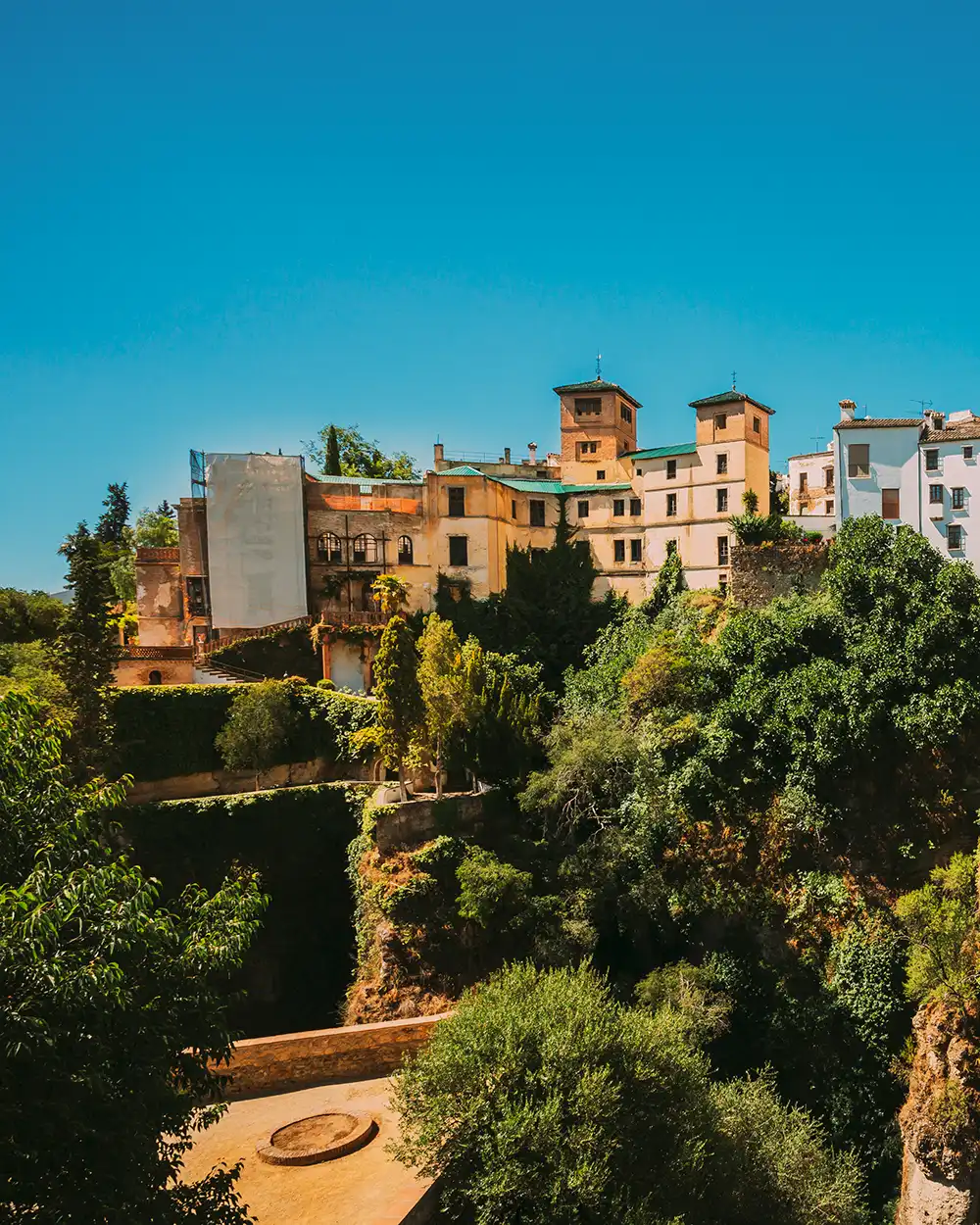
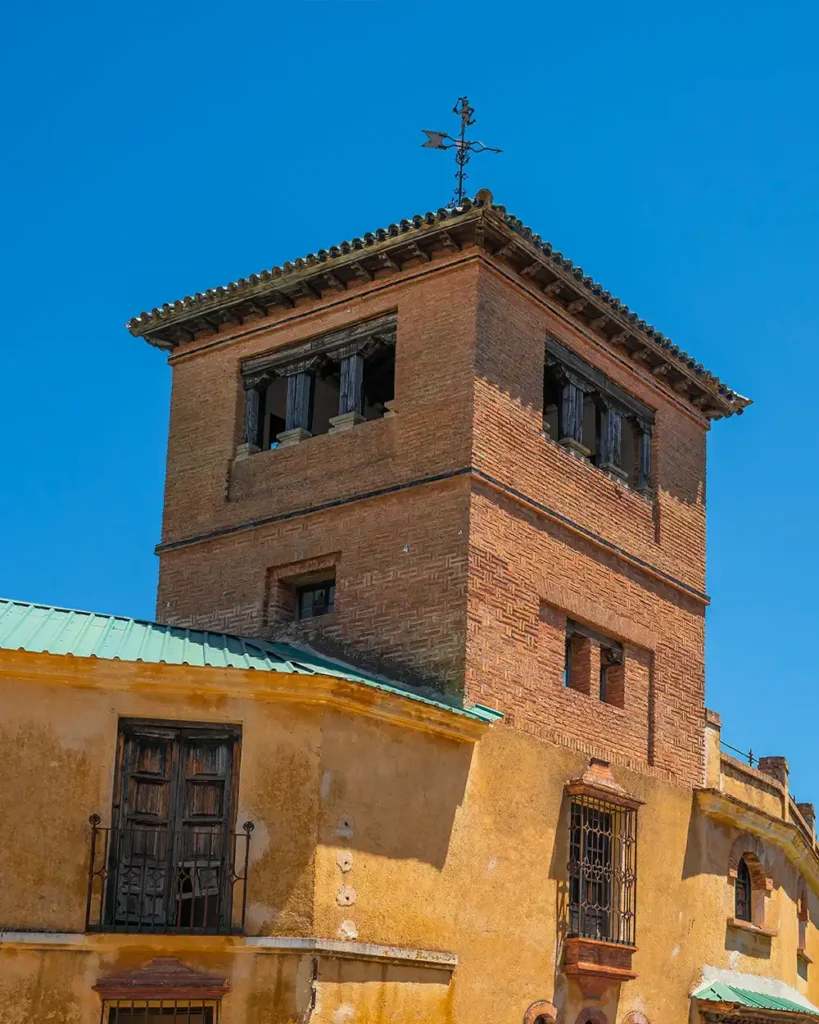
First things first: despite its name meaning “House of the Moorish King,” this isn’t actually a Moorish palace. The house itself dates back to the 18th century, built long after the Moors had left Andalusia. But here’s the thing – what lies beneath is absolutely genuine and dates back to the 14th century.
The complex comprises three main elements: the neo-Mudéjar style house (currently closed for restoration, unfortunately), the stunning terraced gardens designed by French landscaper Jean Claude Nicolas Forestier in 1912, and the star attraction – La Mina de Agua, an ancient water mine that’s one of the best-preserved examples of medieval Islamic hydraulic engineering in all of Spain.
I remember the first time I stood in the Jardines de Cuenca across the gorge, looking up at Casa del Rey Moro perched dramatically on the cliff edge. The view from there gives you a real sense of how strategically important this location was.
The gardens: where peacoks roam free
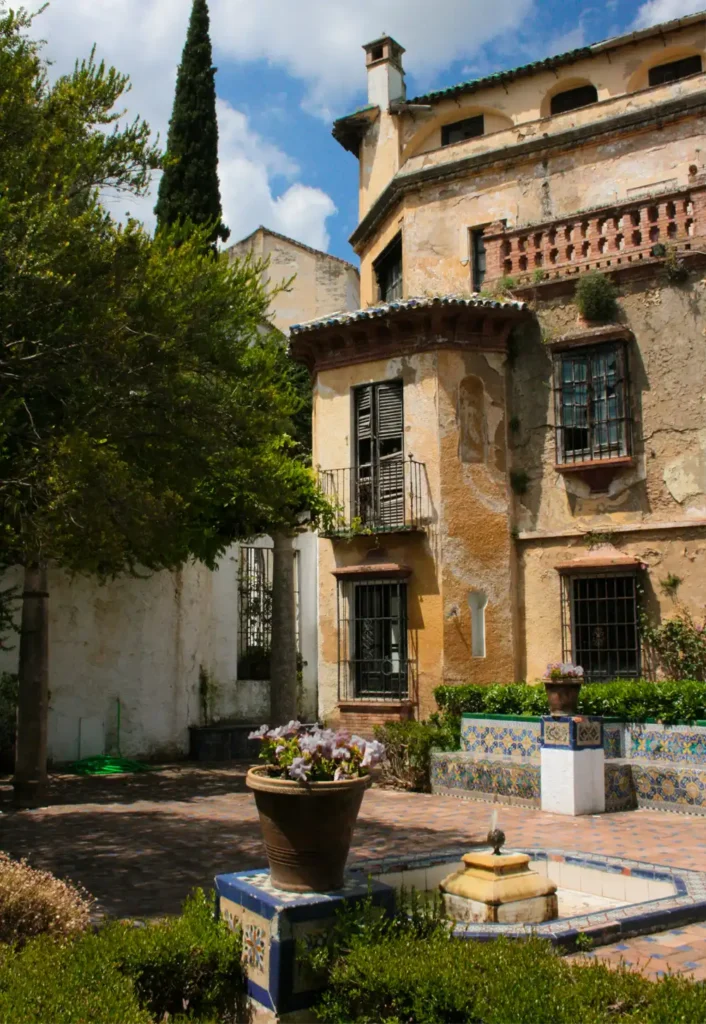
When you enter through the somewhat unassuming doorway on Cuesta de Santo Domingo, you’re immediately transported into another world. The gardens cascade down three terraced levels, each with its own character. Forestier drew inspiration from the Alhambra and Seville’s Alcázar when designing these spaces, and you can see it in every fountain, tiled bench, and carefully planned water channel.
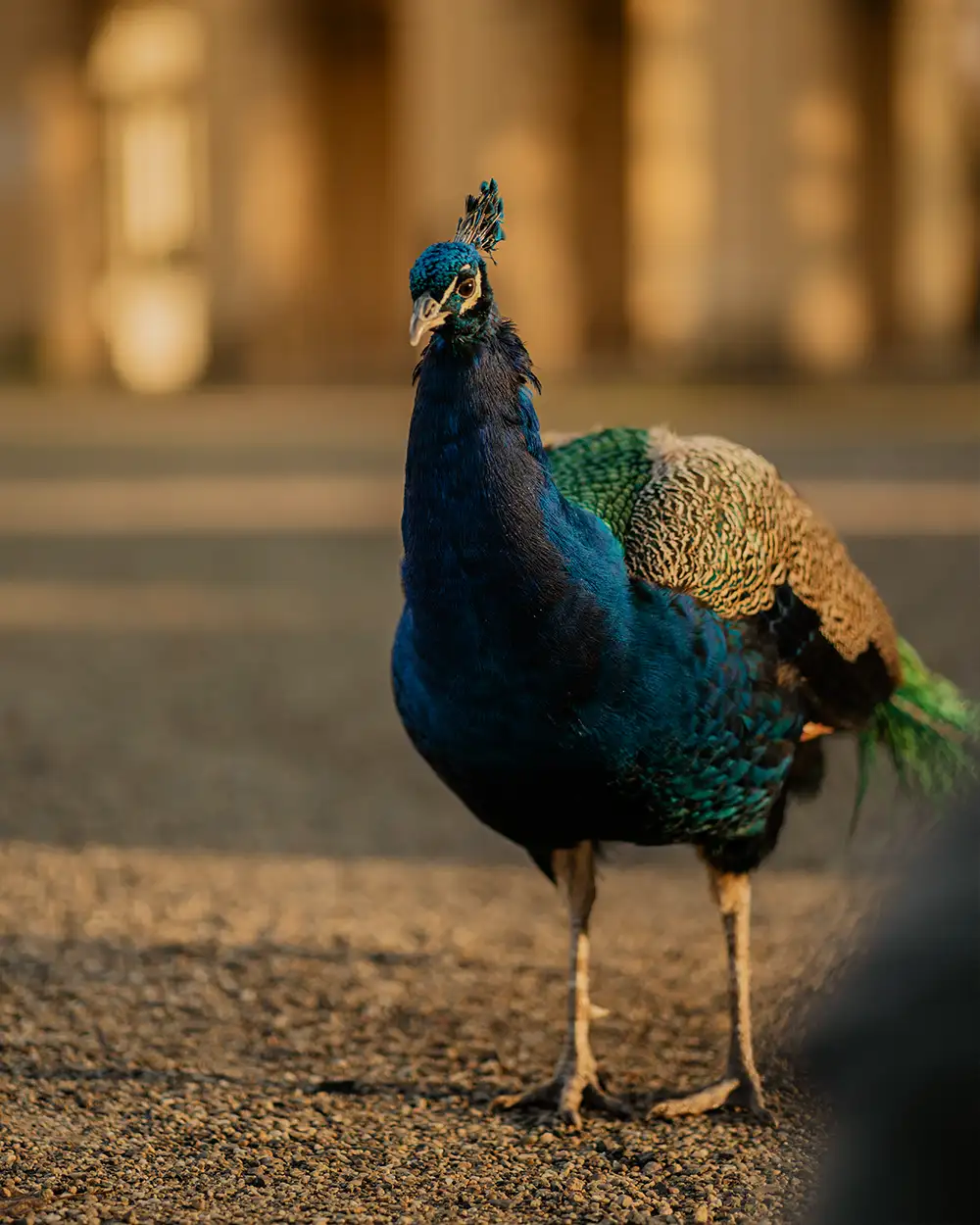
But here’s one of my favorite details that catches visitors by surprise: the resident peacocks. These magnificent birds with their brilliant blue plumage have made the gardens their home, and they’re completely unfazed by visitors. I’ve watched tourists absolutely delighted when one of these regal birds spreads its tail feathers right in front of them. They wander freely with their chicks, adding an almost surreal beauty to an already spectacular setting.
The upper terrace surrounds the house with that quintessentially Andalusian feel – ceramic tile work, a fountain-pond, and shaded seating areas perfect for catching your breath. As you descend through the gardens, water becomes a central theme, flowing through channels and collecting in pools, just as it would have in traditional Islamic gardens meant to evoke paradise.
Practical information
The entrance fee is €10 for adults, which I think is fair considering what you’re getting. From October to April, opening hours are 10:00 to 20:00 (8 PM), and from May to September, they extend to 21:30 (9:30 PM) to take advantage of the longer summer evenings.
Mina de agua: the secret passage
Now, here’s where it gets really interesting – and where most visitors don’t venture. At the bottom of the gardens, you’ll find an unassuming doorway that leads to La Mina. This is not one of those tourist attractions where you pop in, take a photo, and leave. This is the real deal.
When King Abomelic ruled Ronda in the early 14th century, the city was constantly under siege. The first thing any attacking army would do? Cut off the water supply. So the Moors did something extraordinary – they carved a passageway down through a natural crack in the rock, creating a secret route to the Guadalevín River 60 meters below.
The descent involves over 200 steps (I’ve counted them myself on different visits, and the number seems to vary slightly – somewhere between 200 and 231 depending on how you count the irregular ones). These aren’t your standard stairs either. They’re hewn directly from the rock, uneven, narrow in places, and often slippery with moisture seeping through the stone. The walls are covered in cobwebs, adding to the ancient, almost mystical atmosphere.
I won’t lie – it’s challenging. You’re basically descending the equivalent of a 20-story building, and remember, what goes down must come back up. But let me tell you, it’s absolutely worth it.
As you descend, you’ll pass through several chambers that served different purposes:
The Sala de la Noria
Where a large wooden wheel was used to draw water up from below. Christian slaves would have powered this wheel, hauling water in an exhausting human chain.
The Weapons Room
Where the garrison was housed and where defenders could rain arrows or boiling oil down on attackers trying to breach the mine.
The Sala de Secretos
The domed chamber has such peculiar acoustics that whispers in one corner supposedly can’t be heard in the center, but are audible in the opposite corner. The Moors noticed this bizarre characteristic, though whether it was intentional or accidental remains a mystery.
The reward at the bottom
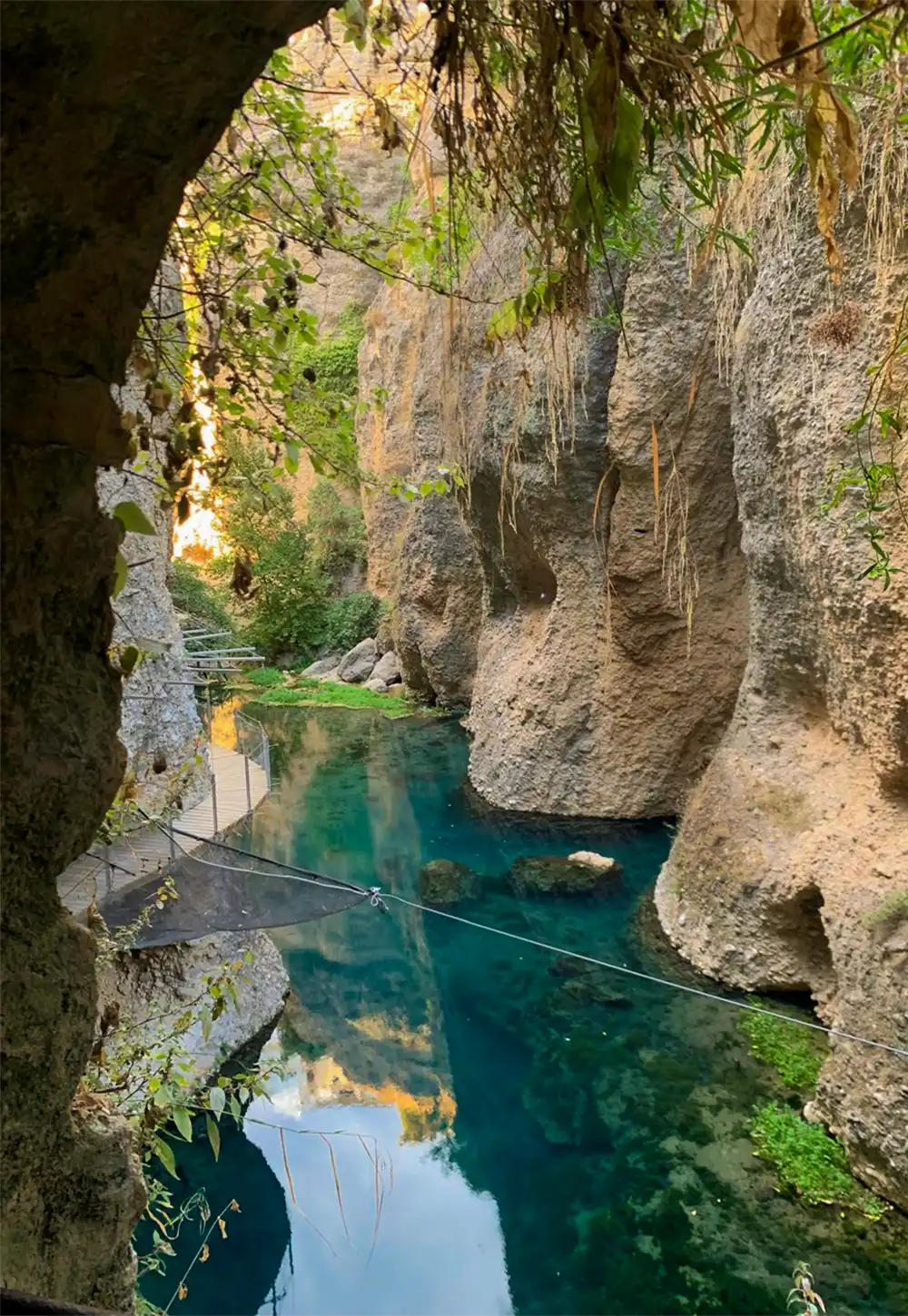
Then, after what feels like descending into the very heart of the mountain, you emerge through a final doorway into one of the most breathtaking spots in Ronda. Suddenly, all the noise of the city above disappears. You’re standing at the bottom of the Tajo gorge, right beside the crystal-clear Guadalevín River, with sheer rock walls rising 120 meters on either side of you.
The tranquility is almost surreal. All you hear is birdsong and the gentle lapping of water. It’s a magical, almost otherworldly place that very few visitors to Ronda ever experience. Not many people know about this hidden corner of the city, which makes it feel like a secret I’m sharing with you.
Looking up from the river, you can see the city of Ronda crowning the cliffs above, and you get a profound sense of how defensible this position was, and why this water source was so crucial to the city’s survival.
One local told me that when you’re down there, you can easily imagine fairies arriving by boat to visit this dream city – and honestly, standing in that peaceful spot, it doesn’t seem far-fetched at all.
Of course, reality kicks in when you remember you have to climb all those steps back up. The ascent is genuinely tough, especially on a warm day. I’ve seen plenty of visitors stopping multiple times to catch their breath. But that’s what the strategically placed openings in the walls are for – rest stops with views.
How Casa del Rey Moro fits into your Ronda visit
When planning your day in Ronda, I’d suggest visiting Casa del Rey Moro in combination with other nearby attractions. The Arab Baths (Baños Árabes) are just a short walk away and pair well thematically. The Mondragón Palace, which was actually where King Abomelic lived, is also nearby and worth seeing.
From the Jardines de Cuenca viewpoint, you can photograph Casa del Rey Moro from across the gorge, getting that classic perspective of the house perched on the cliff edge.
If you’re interested in the complete story of Ronda’s water management during Moorish times, the combination of the mine here and the Arab Baths gives you a comprehensive picture.
Frequently asked questions
How do I get to Casa del Rey Moro from the Puente Nuevo?
It’s about a 10-minute walk downhill from the Puente Nuevo. Head toward the old town, follow Calle Armiñán, then turn onto Cuesta de Santo Domingo. The entrance is on your left at number 9.
How much does it cost to visit Casa del Rey Moro?
Admission is €10 for adults, €3 for children under 12, and free for children under 10. Reduced rates may apply for students and seniors.
Is Casa del Rey Moro suitable for children?
The gardens are fine for kids, but the mine descent is not recommended for young children due to the steep, uneven steps and narrow passages. It’s best for kids 12 and older who are reasonably fit.
Are there really peacocks in the gardens?
Yes! A family of stunning blue peacocks lives in the gardens and they’re quite used to visitors. They’re one of the unexpected delights of the visit.
How many steps are there in the water mine?
There are over 200 steps (sources vary between 200-231) descending approximately 60 meters to river level. The steps are carved from rock, uneven in height, and can be slippery.