

Jardines de Cuenca: Ronda's terraced gardens
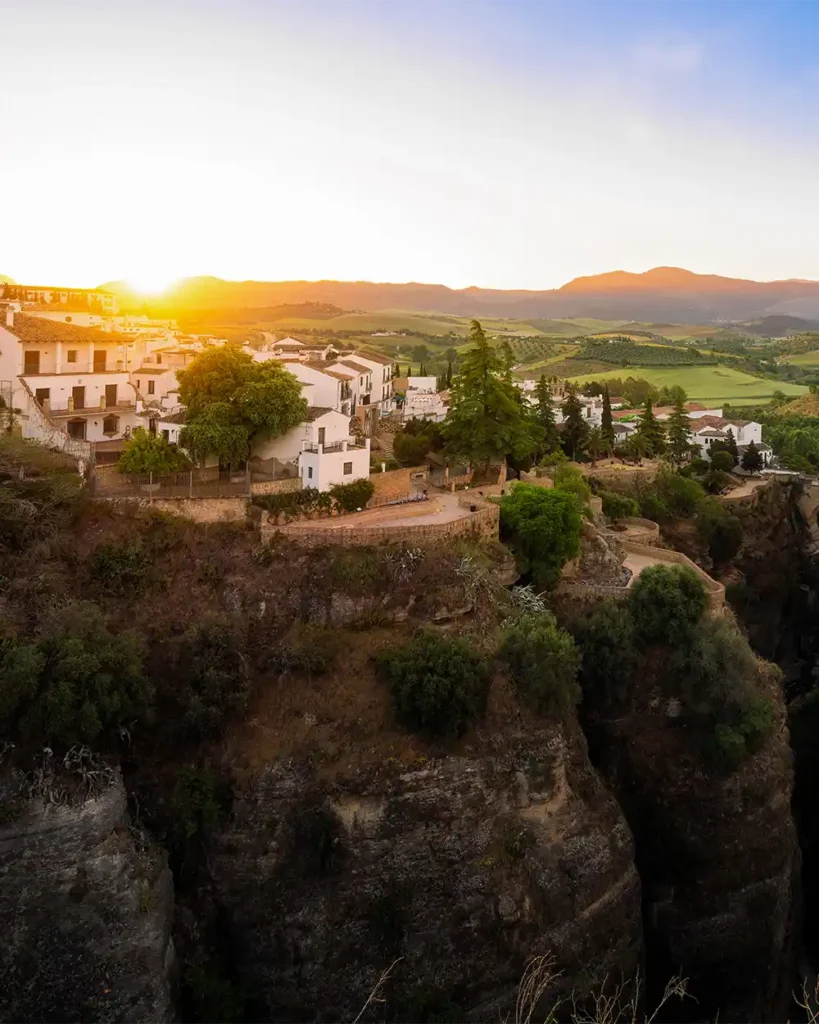
Tucked away in Ronda’s winding streets, the Jardines de Cuenca remain one of the city’s best-kept secrets—a terraced oasis clinging to the side of El Tajo gorge that offers a unique perspective of Puente Nuevo.
- Attractions
- Jardines de Cuenca
Why these gardens captivated me
As someone who’s lived in Ronda for years, I’ve watched countless tourists rush from the bullring to Puente Nuevo and back without discovering one of our city’s most magical spots. I first stumbled upon these gardens during an evening walk years ago, and I’ve returned dozens of times since. What makes the Jardines special isn’t just their beauty—though they’re stunning—it’s the way they reveal Ronda from angles most visitors never see. While everyone else crowds around the same viewpoints, you’ll have space to breathe here, time to actually absorb the landscape, and views that will make you understand why Ronda captivates people so deeply.
What makes these gardens special
A unique perspective
Here’s what most guidebooks miss: the Jardines de Cuenca give you a view of Puente Nuevo from behind and below. While typical photos show the bridge from the Mirador de Aldehuela or the valley floor, here you see it from an angle that reveals its full architectural ambition—how it spans that impossible gap, how it connects two worlds, how it somehow manages to look both massive and elegant at once.
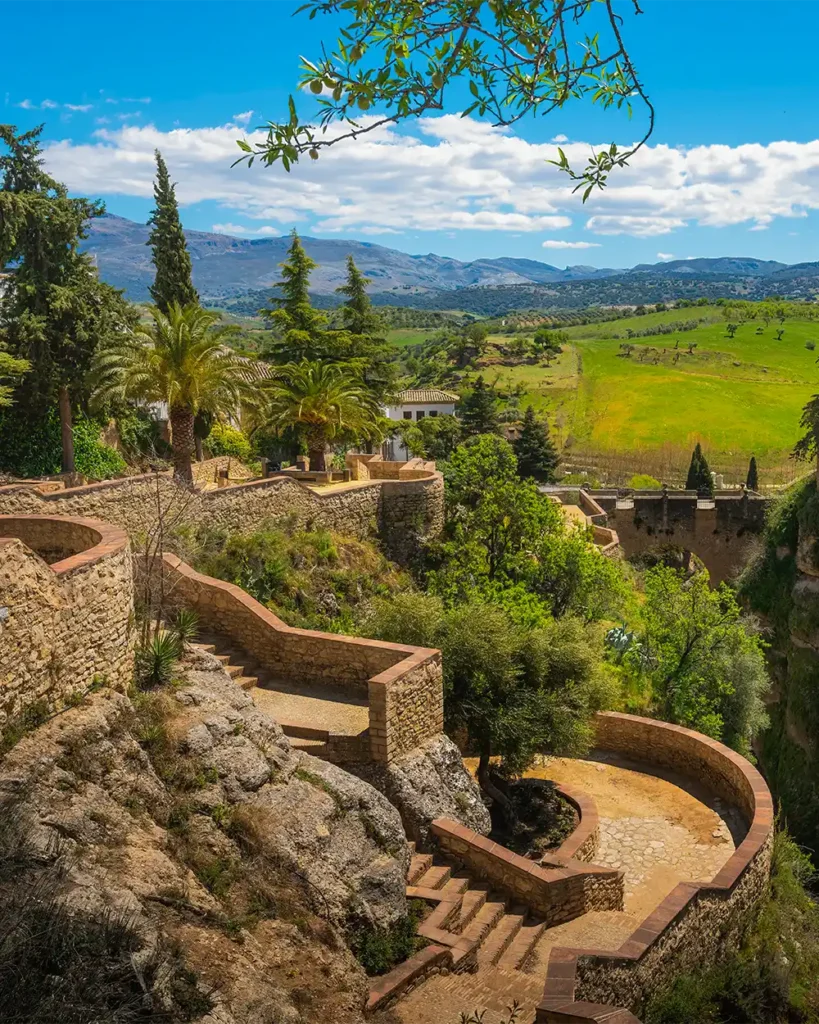
The terraced layout means you can explore the gardens at different levels, each offering its own distinct vantage point. From the upper terraces near Calle Escolleras, you look across at the bridge and the old town beyond. As you descend the winding staircases, the perspective shifts constantly. The lower levels bring you closer to the gorge itself, where you can hear the Guadalevín River rushing below and feel the cool air rising from the depths.
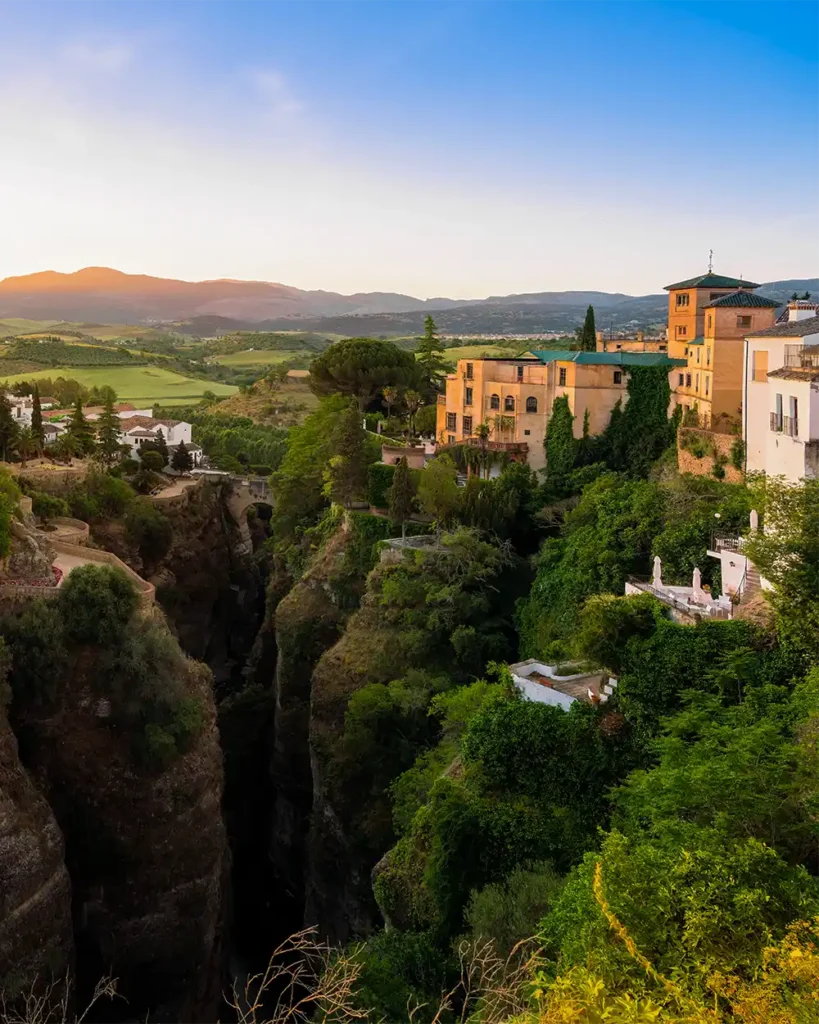
From these gardens, you’ll also spot the Casa del Rey Moro perched on the opposite side of the Tajo. If you listen carefully during the quiet moments, you might hear something unexpected: the calls of peacocks. They live in the Casa’s gardens, and their distinctive voices echo across the gorge, adding an exotic soundtrack to your visit.
Golder hour magic
I’ll let you in on a local secret: come to the Jardines de Cuenca at sunset. The gardens themselves are beautifully illuminated in the evening, creating a romantic atmosphere that’s perfect for a leisurely stroll. But the real magic happens when the dying light hits Puente Nuevo.
During golden hour, the bridge transforms. The warm light catches the stone, turning it honey-colored and picking out every detail of the 18th-century masonry. The shadows deepen in the gorge, creating a dramatic contrast that makes the bridge seem to glow from within. For my money, this is the absolute best place in Ronda to experience Puente Nuevo at sunset. You’ll have the light, the perspective, and usually far fewer people than the main viewpoints.
The natural setting
The 23 terraces are planted with roses, along with cypresses, palms, and hardy succulents that thrive in Andalusia’s intense summer heat. The planting scheme is clever—species that can handle the sun and the dramatic exposure of clinging to a cliff face. In spring and early summer, the roses bloom prolifically, adding splashes of color against the gray-white stone of the gorge and the white-washed houses above.
The gardens aren’t manicured to within an inch of their lives like some formal European gardens. They have a more natural, relaxed quality that suits the dramatic landscape. Stone walls support the terraces, pathways wind between plantings, and there are plenty of benches where you can sit and simply absorb the view.
From the lower sections of the gardens, the ones that feel like they’re practically hanging over the gorge, you can see the river itself threading through the bottom of the Tajo. It’s a perspective few visitors get—most people see the gorge from above or from the valley floor, but here you’re suspended in between, close enough to the action to feel the vertigo but secure on the garden paths.
Why the Jardines de Cuenca exists
These gardens were created in 1975 to celebrate the twinning of Ronda with Cuenca, the Spanish city in Castilla-La Mancha. The connection between our two cities isn’t arbitrary. Both Ronda and Cuenca share a dramatic characteristic: houses that cling impossibly to cliff edges, seeming to defy gravity as they hover over deep gorges. From certain points in the Jardines, you can see Ronda’s own hanging houses, those casas colgantes that mirror Cuenca’s famous architecture and remind us why these sister cities belong together.
The gardens cover about 2,600 square meters and descend nearly 25 meters down the side of El Tajo gorge across 23 terraced levels. What was once a neglected horticultural plot has been transformed into a green ribbon that follows the natural contours of the cliff, creating a unique space where garden meets gorge in the most spectacular way.
Opening hours and admission
The gardens are completely free to visit. They’re generally open from 8:00 AM to 10:00 PM, though these times can vary slightly with the seasons. The lack of gates or strict closing times means you can visit during those magical sunset hours I mentioned.

The navigation challenge
I won’t lie to you—finding the Jardines de Cuenca can be a bit tricky. The entrance isn’t well-signposted, and you’ll need to do some navigating through Ronda’s narrow streets.
Here’s my tip: Start from Calle La Bola (officially called Carrera Espinel), Ronda’s shopping street. Look for El Lechuguita, a well-known local bar that anyone can point you toward. From there, head downhill until you spot a very narrow street on your right. Be careful here—there’s also a narrow street on your left that looks similar. Take the right-hand passage, which honestly looks more like a hidden alleyway than a proper street. Follow it through, and you’ll emerge at the garden entrance on Calle Escolleras.
Alternatively, there are two main entrances: one at the upper level on Calle Escolleras and another at the lower level on Calle Real near the Roman Bridge and Arab Baths. You can also access the gardens from the old city walls if you’re already exploring that area, though I find the route from La Bola most straightforward for first-timers.
Connecting your Ronda itinerary
One of the Jardines de Cuenca’s best features is how naturally they connect to other sites in Ronda’s old town. The lower entrance sits near Puente Romano (the Roman Bridge, though it’s actually from the Moorish period) and the Arab Baths, both worth visiting.
From the gardens, you can easily walk to Puente Viejo, another of Ronda’s historic bridges that predates its famous sibling. From there, continue to the old city walls and the historic Padre Jesús neighborhood. This creates a logical walking circuit that takes you through some of Ronda’s most atmospheric corners without the crowds that cluster around Puente Nuevo.
The Casa del Rey Moro, which you’ll see from the gardens, is also nearby and features its own impressive gardens plus a water mine that descends into the gorge—worth adding to your itinerary if you have time.

Frequently asked questions
How do I find the entrance to Jardines de Cuenca?
The easiest route is from Calle La Bola (the main shopping street). Walk toward Plaza de Toros and find El Lechuguita bar—locals can direct you. From there, go downhill and look for a narrow street on your right (not the one on the left!). It looks like a small alleyway but leads to the garden entrance on Calle Escolleras. There’s also a lower entrance on Calle Real near the Roman Bridge.
Are the Jardines de Cuenca free to enter?
Yes, admission is completely free. The gardens are a public municipal space with no entry fee, making them one of Ronda’s best value attractions.
Can I see Puente Nuevo from the gardens?
Absolutely—this is one of the best viewpoints for Puente Nuevo. You’ll see it from a unique rear angle rather than the typical frontal view, offering a different perspective than the main tourist lookouts. The view from the terraces is less crowded and more intimate.
What else can I see from the gardens?
Besides Puente Nuevo, you’ll see the Guadalevín River at the gorge bottom, Ronda’s hanging houses (similar to those in Cuenca), Puente Viejo, Casa del Rey Moro, and the Roman Bridge. You might even hear the peacocks from Casa del Rey Moro.