

Puente Nuevo of Ronda
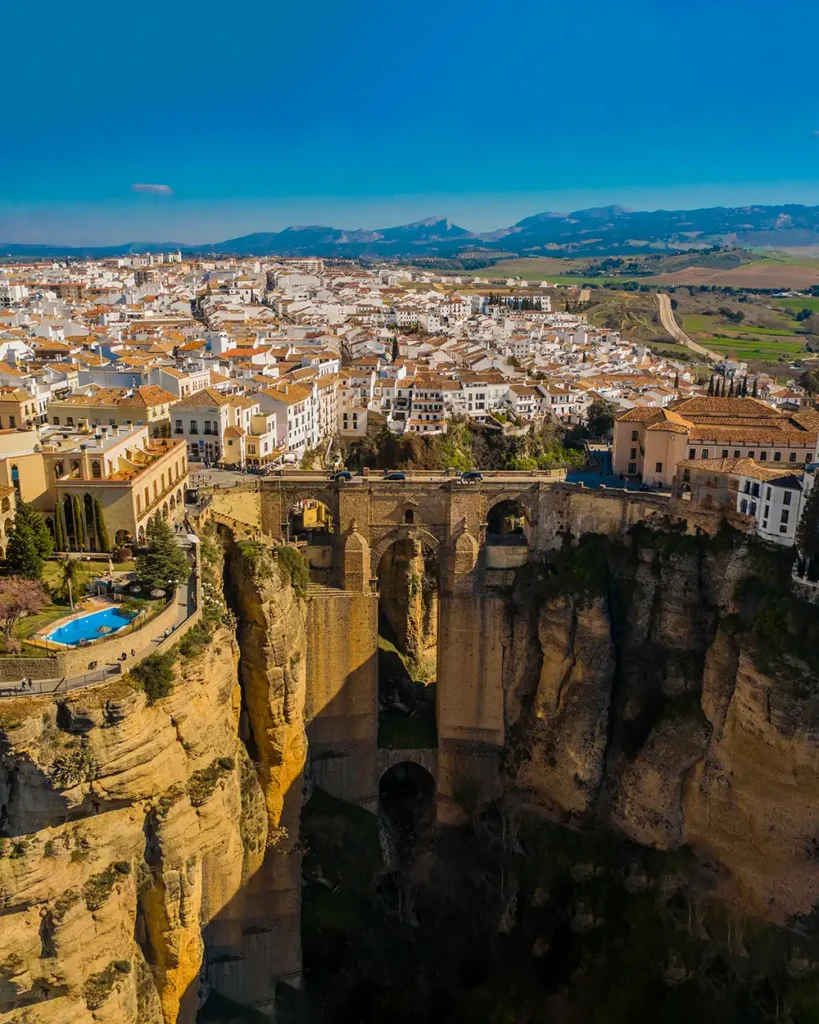
The New Bridge stands as Ronda’s most iconic landmark. This 18th-century masterpiece connects the historic old town with the modern district, creating one of Spain’s most photographed vistas. But behind its postcard-perfect facade lies a story of tragedy, ambition, and architectural triumph that few visitors know.
- Attractions
- Puente Nuevo
A Bridge Built on Tragedy
Before the Puente Nuevo became an icon, there was a disaster. In 1735, architects Jose Garcia and Juan Camacho completed the first attempt to span the gorge—a single-arch bridge that promised to transform Ronda. The city desperately needed a direct connection between its growing market district and the ancient Moorish quarter, as the older Puente Viejo couldn’t handle the increasing traffic.
Six years later, that promise turned to horror. The bridge collapsed catastrophically, plunging into the Guadalevín River and killing approximately 50 people. The tragedy sent shockwaves through Ronda and forced city planners back to the drawing board.
The 34-Year Construction That Created a Legend
The current Puente Nuevo tells a different story—one of patience, engineering brilliance, and unwavering determination. Construction began under architect Domingo Lois de Monteagudo, who designed a revolutionary triple-arch structure that would distribute weight more effectively than its doomed predecessor.
In 1778, the renowned Andalusian architect José Martín de Aldehuela took over the project, refining the design and overseeing its completion in 1793. The bridge took 34 years to build, making it one of the longest construction projects of 18th-century Spain.
But Aldehuela’s brilliance extended beyond the design. The actual construction challenge fell to local engineer Antonio Díaz Machuca, who invented an ingenious system of pulleys and lifting equipment. These mechanisms hoisted massive stone blocks—quarried directly from the gorge floor below—up to heights that seemed impossible at the time. Each stone was precisely cut and positioned to create the soaring structure that has stood for over 230 years.
Aldehuela's Dark Legend
A curious myth haunts the Puente Nuevo: that Aldehuela, devastated by critics who suggested his bridge wasn’t beautiful enough and that a second one would be needed, threw himself from his own creation in despair.
The truth is far happier. José Martín de Aldehuela lived a long, successful life and died peacefully in Málaga in 1802. The Puente Nuevo was considered his crowning achievement even during his lifetime, and to this day, no second bridge has been needed. The architect’s legacy is secure—though the dark legend persists in local storytelling, adding an extra layer of intrigue to the bridge’s history.
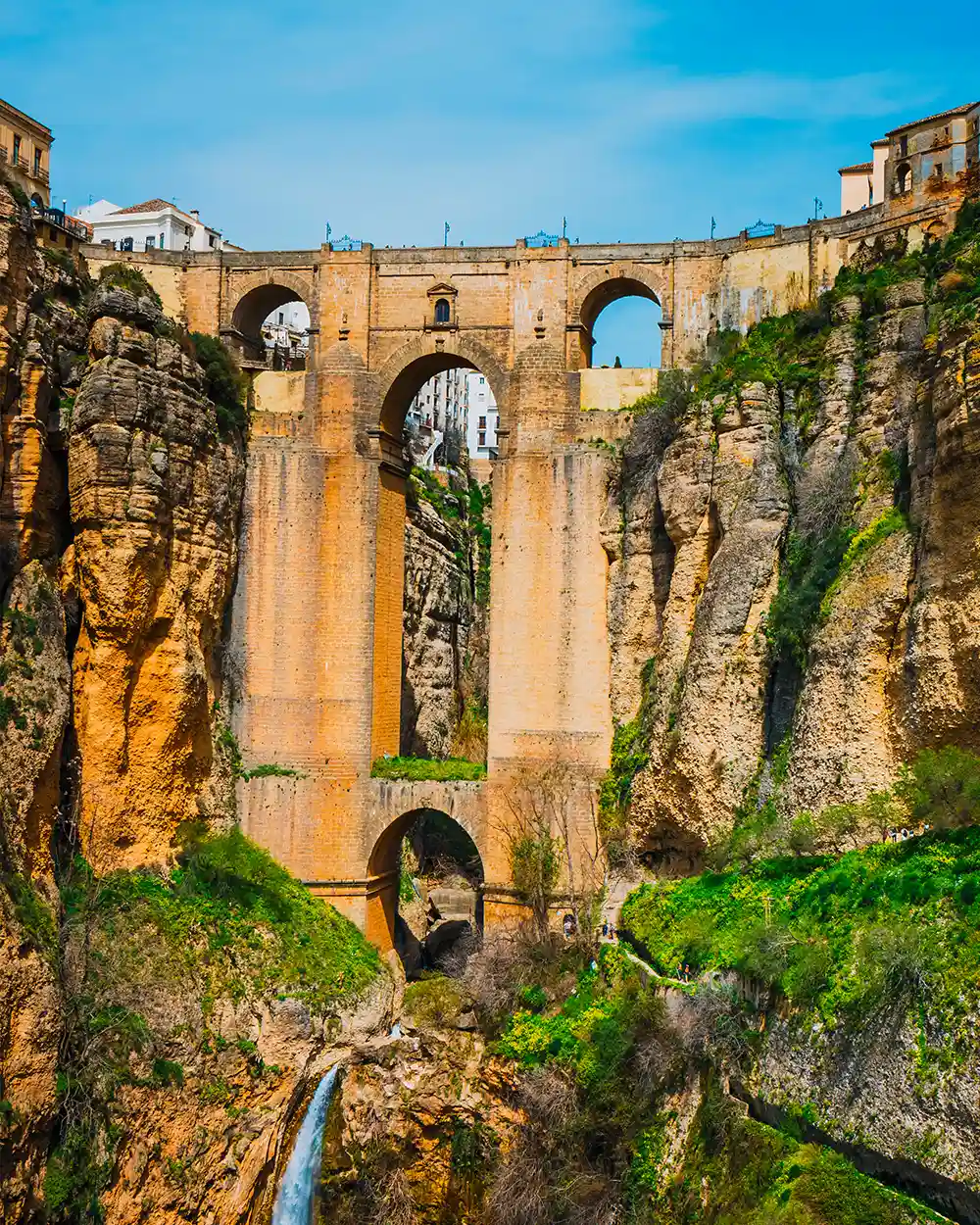
Golden Hour Magic
The warm golden light bathes the bridge and surrounding cliffs in stunning hues of orange, pink, and amber, creating dramatic contrasts perfect for photography. During this time, crowds typically thin out and temperatures become more pleasant, allowing you to appreciate the bridge’s majesty.
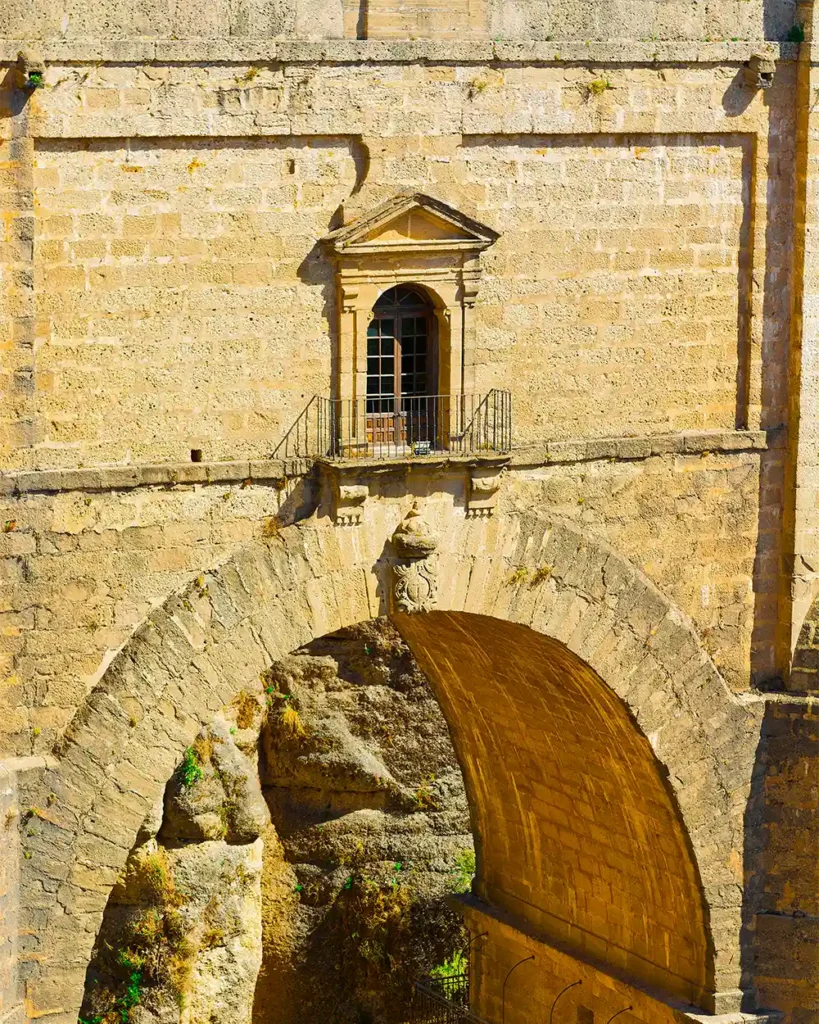
Inside the Bridge
Above the central arch, there’s a secret that most visitors never discover: a hidden chamber within the bridge itself. This room has served many purposes throughout history:
- Original use: Guard house and storage
- 18th-19th century: Prison for common criminals
- Spanish Civil War: Allegedly used by both sides as a detention and interrogation facility (though the extent of this use remains debated by historians)
- Later years: Briefly converted into a bar in the mid-20th century
- Today: Puente Nuevo Interpretation Center, a small museum showcasing the bridge’s construction history, architectural plans, and the gorge’s geology
The Desfiladero del Tajo
The Puente Nuevo wouldn’t exist without El Tajo—the magnificent gorge carved by the Guadalevín River over millennia. This dramatic chasm measures approximately 500 meters long and reaches depths of 100-120 meters, creating natural walls of limestone that tower on both sides of the river.
For adventurous visitors seeking a unique perspective, the Desfiladero del Tajo walking path offers an experience reminiscent of the famous Caminito del Rey. This dramatic trail descends into the gorge itself, providing spectacular views from below the bridge that few tourists discover.
The path winds along the edge of the canyon, offering breathtaking vistas of the sheer rock walls, the cascading Guadalevín River, and, of course, the imposing structure of the Puente Nuevo towering above.
The vegetation clinging to the cliff faces, the sound of running water, and the play of light and shadow create an almost mystical atmosphere. This lesser-known trail allows you to appreciate the true scale and engineering feat of the bridge from a completely different angle.
The walk is moderately challenging but accessible to most visitors with reasonable fitness levels.
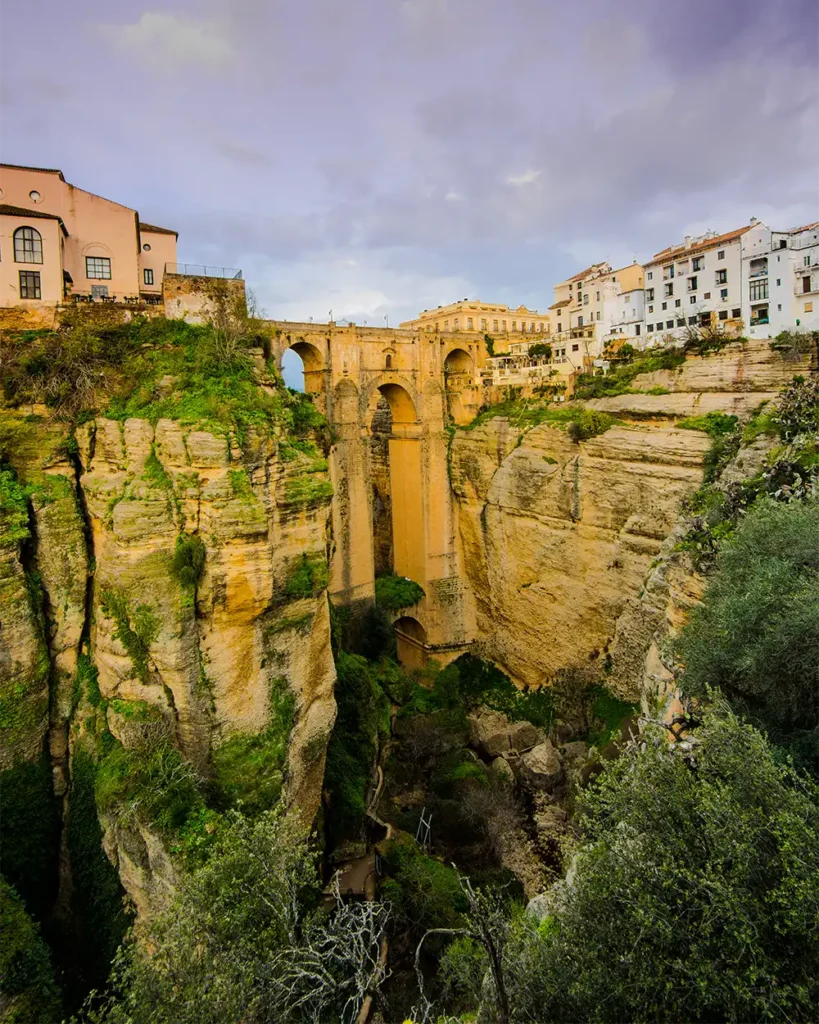
How to Experience the Puente Nuevo
The Puente Nuevo is located in the heart of Ronda and is easily accessible on foot from anywhere in the town. Most hotels and accommodations are within walking distance.
Early morning (before 10 AM) and late afternoon/evening offer fewer crowds. Mid-morning to early afternoon tends to be busiest, especially during peak tourist season.
Bring a wide-angle lens to capture the full scope of the bridge. The golden hour provides the best natural lighting, but overcast days can also create dramatic, moody photographs.
Puente Nuevo Interpretation Centre
Located within the bridge itself, this museum offers exhibits on the bridge’s construction, history, geology, and fauna of the gorge.
Open Monday-Friday 10am-6pm (winter) / 10am-7pm (summer). Entry: €2.
Nearby attractions
Ronda offers numerous attractions within walking distance of the Puente Nuevo. The Plaza de Toros is one of Spain’s oldest and most beautiful bullrings. The Arab Baths are among the best-preserved Moorish baths in Spain. The area is also dotted with excellent tapas bars and restaurants. Don’t miss the Casa del Rey Moro with its water mine carved into the rock, and the Palacio de Mondragón.
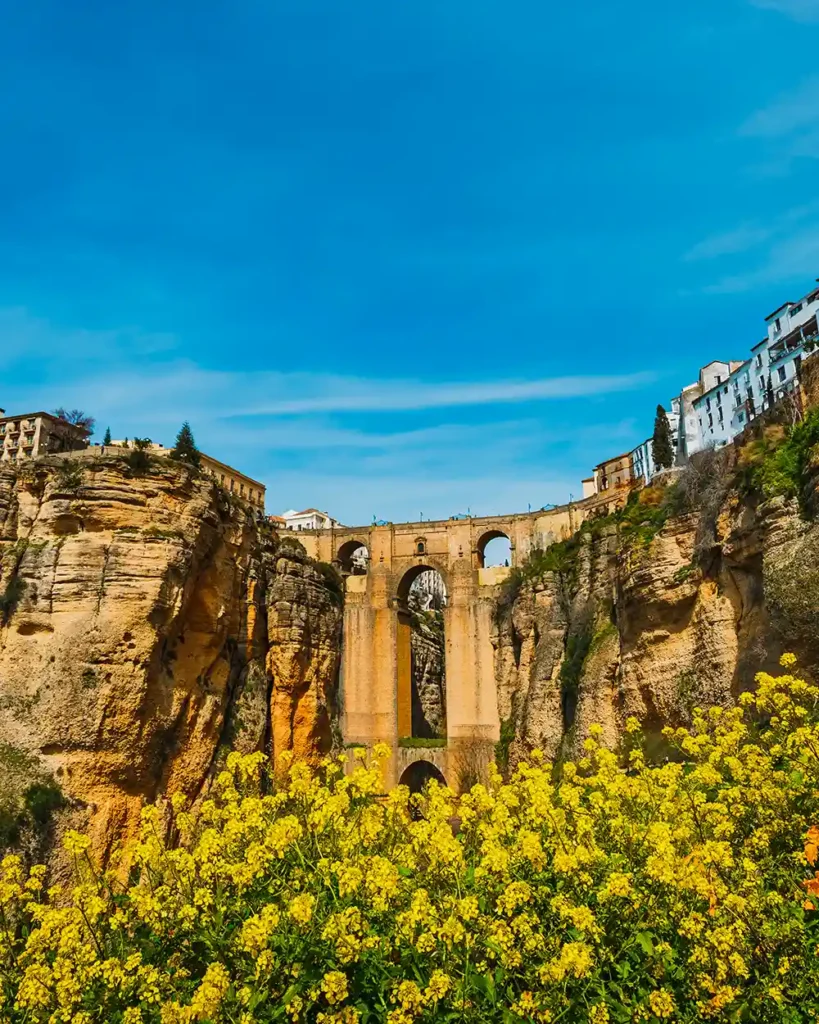
The Classic Viewpoint: Mirador del Tajo
For the most iconic and complete view of the Puente Nuevo, head to the Mirador del Puente Nuevo located below the bridge. This popular viewing platform sits at a lower elevation, allowing you to see the entire structure in all its glory, from the top of the arch to the river far below.
From this vantage point, you can truly appreciate the bridge’s impressive height and the dramatic depth of the El Tajo gorge. The viewpoint is accessible via a walking path that descends from the old town, and while there are some stairs and inclines, the effort is minimal compared to the reward. This is arguably the best location for photographs that capture the full majesty of the Puente Nuevo.
The viewpoint is particularly stunning in the late afternoon when the western sun illuminates the bridge’s facade, creating perfect lighting conditions for photography.
A Hidden Perspective
For those seeking a less crowded and unique perspective of the Puente Nuevo, the Jardines de Cuenca offer a hidden gem that most tourists overlook. These beautiful terraced gardens provide a quieter, more intimate viewing experience of the bridge from yet another angle.
From the Jardines de Cuenca, you can also access the Puente Viejo. This older structure, built during the Moorish period, offers its own charm and historical significance.
The gardens are beautifully maintained with various native plants and flowers, benches for resting, and multiple terraces that provide different perspectives. It’s an ideal spot for a peaceful afternoon stroll, photography, or simply sitting and absorbing the incredible scenery.
The Bridge That Connected Ronda's Past and Future
When King Felipe V first proposed spanning the gorge in 1735, Ronda was bursting at its seams. El Mercadillo—the “little market”—had outgrown its humble name and become the commercial heart of the entire region. Calle Real (Royal Street) bustled with merchants, farmers, and craftsmen, but they were cut off from the historic La Ciudad quarter by the gorge’s natural barrier.
The Puente Viejo, built in 1616 downstream, couldn’t handle the traffic. When the Guadalevín River ran high, it flooded regularly. A new bridge at the highest, widest point of the gorge would solve both problems—if it could be built.
The Puente Nuevo succeeded where its predecessor failed, not just as infrastructure but as a symbol. It represented Enlightenment-era confidence in human engineering, the wealth and ambition of 18th-century Ronda, and the determination to overcome natural obstacles. Today, it serves the same practical purpose it did in 1793—connecting two halves of a city—while also standing as Ronda’s most recognizable icon.
Frequently asked questions
Why visit the new bridge of Ronda?
The Puente Nuevo is more than just a bridge—it’s the soul of Ronda, a masterpiece of engineering that has connected communities, inspired artists, and awed visitors for over two centuries. Whether you’re admiring it from the classic Mirador del Puente Nuevo, experiencing it from below along the Desfiladero del Tajo, enjoying the view from Restaurante Arrabal, or discovering the hidden perspective from the Jardines de Cuenca, each viewpoint offers its own magic.
Why is it called the "New" Bridge?
The name “Puente Nuevo” (New Bridge) actually refers to the fact that it replaced an earlier bridge built in 1735. That first bridge was constructed in just 8 months and featured a single bold arch spanning 35 meters across the gorge—an extraordinarily ambitious design for its time. However, the rushed construction and inadequate support proved catastrophic: the bridge collapsed in 1740, just six years after completion, killing approximately 50 people.
This tragedy occurred at a pivotal moment in engineering history. The world’s first engineering school, the École Royale des Ponts et Chaussées, wouldn’t open in France until 1747, and Spain’s first engineering school wasn’t established until 1802. The earlier bridge was built using trial and error rather than precise calculations.
Learning from this disaster, engineers took a radically different approach for the “new” bridge. Instead of a single daring arch, they designed a more conservative three-span structure with the supports descending nearly 100 meters to rest on the riverbed itself. Construction began in 1751 and took over 40 years to complete, led by architect José Martín de Aldehuela from 1785 onwards. This patient, robust design prioritized safety over speed, resulting in the engineering masterpiece that has stood strong for over 230 years.
So while the Puente Nuevo has been standing since 1793, making it over two centuries old, it earned its name by being the “new” replacement for the failed bridge that came before it—a poignant reminder that great engineering sometimes emerges from learning hard lessons.
What is the best time to visit Puente Nuevo Ronda?
The best time to visit is during golden hour at sunset when the bridge and gorge are bathed in spectacular warm light. Early morning before 10 AM is ideal for avoiding crowds.
How do I get the best view?
The Mirador del Puente Nuevo viewpoint below the bridge offers the most complete view. For unique perspectives, visit the Jardines de Cuenca or walk the Desfiladero del Tajo trail.
Where can I see Puente Nuevo from below?
The Desfiladero del Tajo walking trail takes you into the gorge below the bridge, offering spectacular upward views. The Mirador del Puente Nuevo also provides excellent lower viewpoints.
What restaurants have views of Puente Nuevo?
Restaurante Arrabal offers spectacular views of the Puente Nuevo and El Tajo gorge from its terrace, making it perfect for dining with a view.
What is the height of the bridge?
The height of the Puente Nuevo in Ronda is approximately 98 meters (about 322 feet). However, the bridge stands around 120 meters (394 feet) above the Guadalevín River, which flows through the bottom of the El Tajo Gorge. This dramatic drop makes it one of the most spectacular bridges in Spain.